


Parent Research for Private Schools in Nigeria: How to Set Fees, Keep Families and Grow Enrolment
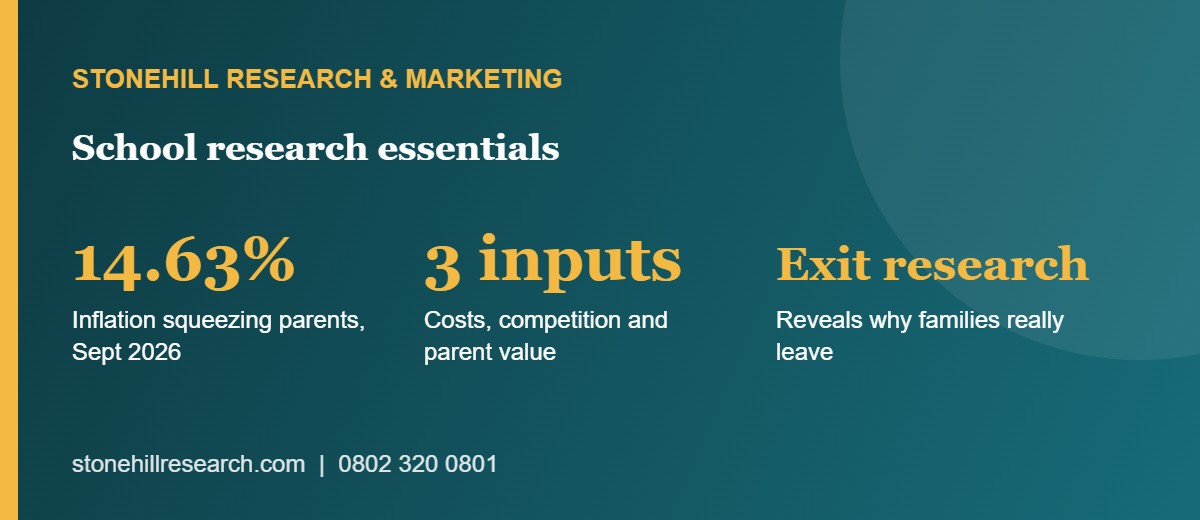
Every January and September, private school owners across Nigeria face the same dilemma. Costs have risen sharply. Teachers want higher pay. Diesel, food, books and maintenance cost more than last year. Yet parents are under pressure too, with inflation still at 14.63% in September 2026 and household budgets stretched. Raise fees too much and families move children to cheaper schools. Raise them too little and the school cannot pay its staff or invest.
Many schools set fees by instinct or by copying the school down the road. They find out too late that parents valued something they cut, or did not value something they spent heavily on. Others open new branches based on optimism rather than evidence of demand.
Parent and market research gives school owners the evidence to make these decisions well. This guide explains how private schools in Nigeria can use research to set fees, retain families, grow enrolment and plan expansion.
Why private schools need research now
Affordability pressure. Families are re-examining every expense. Some are moving children from premium schools to mid-range ones, or from mid-range schools to low-cost private or public options.
Rising competition. New schools open every year in growing areas of Lagos, Abuja, Port Harcourt, Ibadan and other cities. Parents have more choice.
Changing expectations. Parents increasingly ask about technology, digital learning, safety, extracurricular activities, international curricula and results in WAEC, NECO and international examinations.
Staff retention. Teacher emigration and competition from other schools push up salaries, which affects fees.
Reputation travels fast. Parent WhatsApp groups and social media spread praise and complaints quickly.
What schools should research
Parent satisfaction and retention
Why do families stay, and why do they leave? Satisfaction research with current parents shows what the school does well and where it falls short: teaching quality, communication, safety, facilities, discipline, extracurricular activities, fees and value for money.
Exit research
Interviews with parents who withdrew children reveal the real reasons for leaving. Fee increases are often blamed, but deeper issues such as poor communication, a bad experience with a teacher or concerns about safety often lie behind the decision.
Fee sensitivity
What will parents accept, and how do they compare your fees with alternatives? Research can test different fee levels, payment plans and package options without the risk of announcing a change first.
Brand and positioning
How do parents and prospective parents see the school compared with competitors? What words come to mind? What is the school known for?
Demand for expansion
Before opening a new branch or adding a secondary section, research the catchment area: number of school-age children, household incomes, existing schools and their fees, travel patterns and unmet needs.
New programmes
Before launching a new curriculum, after-school programme, boarding facility or technology offering, test demand and willingness to pay.
Research methods for schools
| Method | Best for |
|---|---|
| Online or paper parent surveys | Satisfaction, priorities, fee sensitivity across all families |
| Telephone interviews | Exit research and deeper feedback from busy parents |
| Focus groups with parents | Exploring attitudes to fees, curriculum and communication |
| Student surveys | Learning experience and wellbeing, with appropriate consent |
| Staff surveys | Teacher morale and perspectives on what parents value |
| Catchment area surveys | Demand and competition for new branches |
| Mystery shopping | How the school handles enquiries and admissions visits |
Keep parent surveys short and confidential. Parents speak more honestly when they know responses are anonymous and handled by an independent party.
Setting fees with evidence
Fee decisions should combine three inputs:
- Costs. What the school must spend to deliver its promise, including salaries, facilities, materials and investment.
- Competition. Fees and offerings of comparable schools in the area.
- Value perception. What parents value most and what they would pay for it.
Research helps with the third input. It may show that parents will accept a moderate fee increase if the school maintains small class sizes and adds a reliable school bus, but that they resent charges for items they see as compulsory extras, such as excessive uniform changes or levies with no clear purpose.
Consider options that ease affordability without cutting quality:
- Termly or monthly payment plans.
- Sibling discounts.
- Early payment discounts.
- Unbundling optional services, such as transport, meals and clubs.
- Clear communication about what fees pay for.
Communicating fee changes
How a school communicates a fee increase matters as much as the amount. Parents react badly to surprise increases announced at the start of term. Better practice includes:
- Announcing changes well before the new session.
- Explaining the cost pressures in plain terms.
- Showing what the school is doing to control costs.
- Highlighting improvements parents will see.
- Offering payment options for families under pressure.
Research can test messages with parents before the announcement.
A worked example
A private primary and secondary school in Lagos with about 650 students planned a 35% fee increase for the new session. Management feared losing families but saw no alternative.
The school commissioned a parent survey with 410 responses, telephone interviews with 25 families who had left in the past two years, and two focus groups. The research showed that parents rated teaching quality and safety highly, but were frustrated by poor communication and frequent additional levies. Many said they would accept an increase if levies were removed and fees covered all compulsory items. Exit interviews showed that several families had left after unresolved complaints, not because of fees.
The school adopted an all-inclusive fee with a smaller headline increase than planned, scrapped most levies, introduced a termly payment plan, and set up a parent communication app with weekly updates. Enrolment held steady, and parent satisfaction scores rose the following year.
Figures are illustrative.
Planning a new branch
Expansion is a major investment. Before committing to land, buildings and staff, research should answer:
- How many families with school-age children live within a realistic travel distance?
- What fees can they afford?
- Which schools already serve the area, at what fees, and how full are they?
- What do parents in the area feel is missing?
- How do traffic and travel patterns affect catchment?
A catchment study combining household surveys, competitor mapping and interviews with local parents reduces the risk of opening in the wrong place.
Ethics and data protection
Research involving children requires care. Obtain parental consent for any student research, keep questions age-appropriate, and protect responses. Parent data is personal data under the Nigeria Data Protection Act 2023. Explain how responses will be used, keep data secure, and report results in aggregate.
Common mistakes
- Setting fees by copying competitors without understanding parent value.
- Assuming fee increases are the main reason families leave.
- Surveying parents without guaranteeing confidentiality.
- Ignoring the views of teachers, who hear parents’ concerns daily.
- Opening new branches without catchment research.
- Collecting feedback and taking no visible action.
Research for nursery and early years providers
Parents choosing a crèche or nursery weigh different factors from parents of older children. Safety, hygiene, caregiver warmth, location near home or work, flexible hours and communication about the child’s day matter most. Fee sensitivity is high, because many families pay for early years care alongside other school fees. Research with parents of young children should explore daily routines, work schedules, transport and trust. Site visits and conversations with caregivers often reveal concerns that surveys miss.
Secondary schools and examination results
For secondary schools, academic results remain a strong driver of choice. Parents look at WAEC, NECO and international examination results, university admissions and how well the school prepares students for the next stage. But results alone do not keep families. Research often shows that parents also value discipline, moral development, career guidance, sport and arts, and a safe environment. Schools that understand the full set of priorities can position themselves beyond league tables.
Measuring the admissions funnel
Schools lose prospective families at every step of the admissions process. Track:
- Enquiries received, by source such as referrals, social media, signboards and events.
- School visits booked and attended.
- Applications submitted.
- Entrance assessments taken.
- Offers made and accepted.
Mystery shopping the enquiry and visit process shows how prospective parents are treated. Interviews with parents who visited but did not enrol explain where the school lost them. Small improvements, such as faster responses to enquiries and better-prepared tour guides, often increase enrolment without any change to fees.
Teacher research
Teachers shape the parent experience. Staff surveys reveal morale, workload, training needs and the issues parents raise with them every day. Schools that lose experienced teachers often see parent satisfaction fall soon after. Including teachers in research gives management early warning and practical ideas for improvement.
Benchmarking against competitor schools
Parents compare schools constantly. A competitor study maps fees, class sizes, facilities, curriculum, examination results, extracurricular offerings and parent perceptions for schools in your area. It shows where your school leads, where it lags, and where gaps exist in the local market. Combine published information, mystery shopping visits and interviews with parents who considered several schools.
Acting on what parents say
Parents notice when a school listens. After each survey, share a short summary of what parents said and what the school will do in response. Then report progress during the year. Visible action builds trust, increases future response rates, and turns satisfied parents into advocates who recommend the school to friends. In Nigeria, where word of mouth drives school choice, that advocacy is worth more than any advertising.
Timing your research
Run parent satisfaction surveys in the second term, when parents have enough experience of the session to judge it, and well before fee decisions for the next session are made. Catchment studies for new branches should be completed at least a year before the planned opening.
Start with one survey
Schools new to research should begin with a short annual parent survey and exit interviews. These two steps alone reveal most of what needs fixing.
Frequently asked questions
How can private schools set fees fairly?
Combine cost analysis, competitor benchmarking and parent research on what families value and will pay, and communicate changes clearly and early.
Why do parents withdraw children from private schools?
Reasons include affordability, but also poor communication, unresolved complaints, safety concerns, teaching quality and relocation. Exit interviews reveal the real causes.
How often should schools survey parents?
An annual satisfaction survey is a good baseline, with short pulse surveys after major changes and exit interviews whenever families leave.
What is a catchment study?
Research that estimates demand for a school in a defined area by examining households, incomes, existing schools, fees and travel patterns.
Should schools survey students?
Yes, with parental consent and age-appropriate questions. Student feedback gives valuable insight into learning experience and wellbeing.
How can private schools increase enrolment without cutting fees?
Track the admissions funnel, respond quickly to enquiries, improve school visits, and interview parents who visited but did not enrol to understand where the school lost them.
Work with Stonehill Research
Stonehill Research & Marketing conducts parent satisfaction surveys, fee sensitivity studies, exit research and catchment studies for private schools and education providers in Nigeria. We guarantee confidentiality and translate findings into practical recommendations. See our education research services and customer satisfaction surveys.
Discuss your next study: call 0802 320 0801 or 0807 576 5799, email info@stonehillresearch.com, or visit stonehillresearch.com/contact-us.
This article is general information based on research practice.