
Trust Deficit Economy: Why Nigerian Consumers Are More Sceptical Than Ever
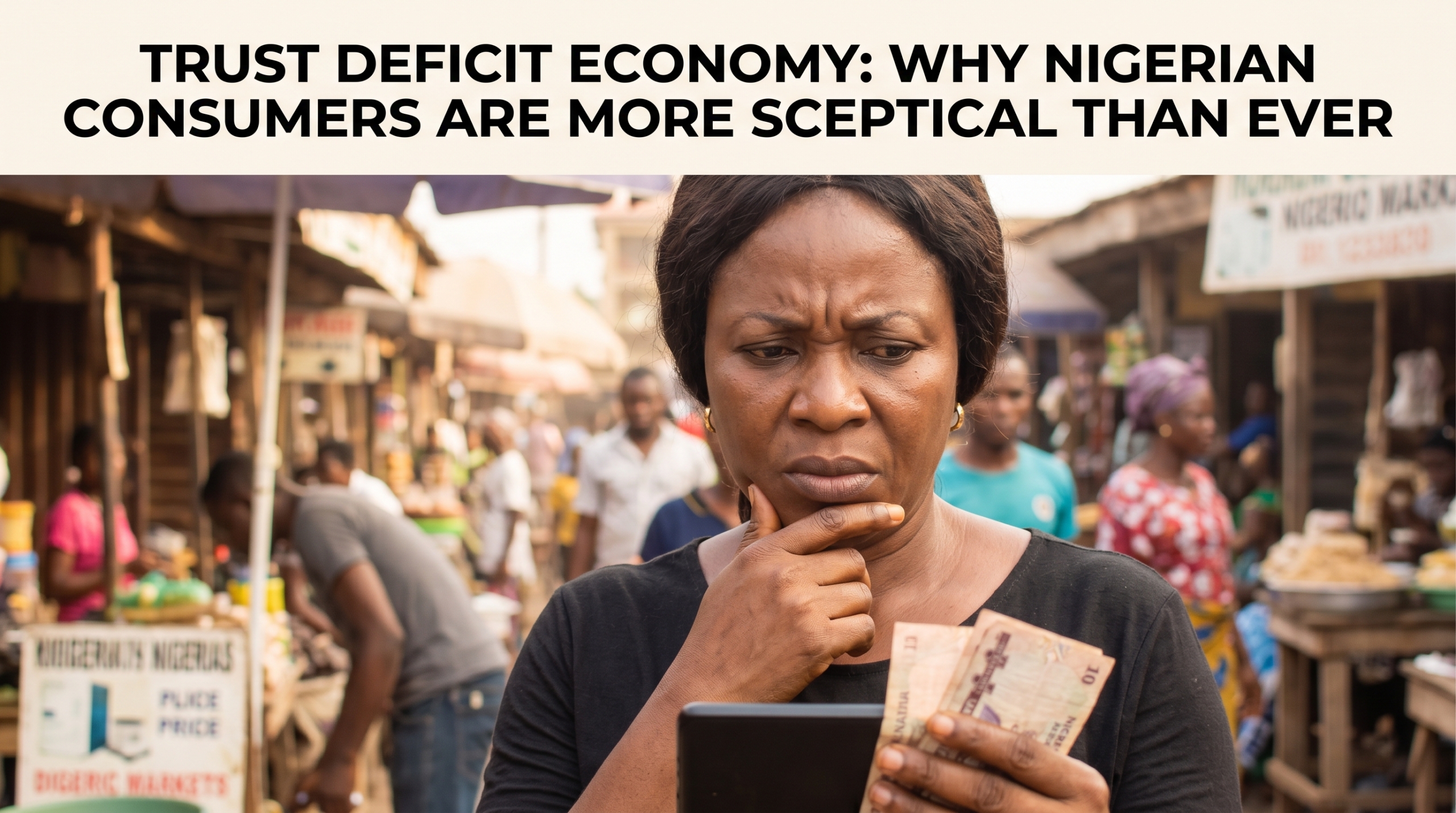
Nigerian consumers have changed. Dramatically.
Economic instability, currency devaluation, rising inflation, and pervasive uncertainty have fundamentally altered their relationship with brands, institutions, and the marketplace. Skepticism has become the default consumer mindset.
Understanding this phenomenon is crucial for any business trying to succeed in Nigeria’s complex consumer landscape. Let me walk you through why trust has collapsed and how to rebuild it.
At Stonehill Research , we help businesses understand the skeptical Nigerian consumer. Our Consumer Trust Audit service is where smart companies start.
Understanding trust deficit: a foundational concept
That was formal. Sorry.
Here is the real talk. In consumer contexts, trust deficit manifests when customers no longer believe that businesses will deliver on their value propositions, honour commitments, or act in consumers’ best interests. There is a gap between what brands promise and what they actually deliver.
Think of it like this. Every time a brand overpromises and underdelivers, it chips away at trust. After enough chips, the whole thing crumbles.

The Nigerian economic context: seeds of scepticism
The currency crisis and its ripple effects.
Nigeria’s economic landscape shifted seismically after the removal of the controlled exchange rate system in mid-2023. The naira experienced dramatic depreciation, surging from approximately ₦462 per dollar in May 2023 to over ₦1,630 by July 2024. That is a staggering increase of more than 250% in just over a year.
This currency collapse had immediate consequences. Nigerian GDP contracted from 477billionin2023to253 billion in 2024, a 47% decline in dollar terms. For consumers, imported goods became prohibitively expensive overnight.
While recent data from Q3 2025 shows some stabilisation with a balance of payments surplus of $4.60 billion and economic growth reaching 4.23% in Q2 2025, the damage to consumer confidence remains profound.
The inflation nightmare.
Inflation peaked at 34.6% in November 2024. Food inflation reached a crushing 40% during the worst periods. Although recent months have shown improvement with headline inflation declining to 16.05% in October 2025, Nigerian households have experienced sustained erosion of purchasing power.
The average Nigerian household was already spending over half its income on food before the crisis. These inflation rates forced impossible choices between necessities. This sustained economic pressure has created a consumer base that approaches every purchase decision with heightened caution.
The debt burden reality.
As of March 31, 2025, Nigeria’s public debt reached ₦149 trillion, approximately ₦652,000 per capita. Debt servicing consumed a staggering $8.55 billion in 2024, a 68% increase from the previous year. Over 80% of government revenue is now allocated to debt servicing.
For consumers, this translates to concerns about future taxation, reduced public services, and economic stability. The perception that national finances are precarious fuels skepticism about institutional stability.
Global context: Nigeria in the worldwide trust crisis
Nigerian consumers’ scepticism reflects broader global trends.
According to the 2025 Edelman Trust Barometer, we are experiencing what UN Secretary-General António Guterres termed a global “Trust Deficit Disorder.” Globally, 71% of consumers reported trusting companies less than they did a year ago.
Trust in institutions worldwide has declined across government, business, media, and NGOs. Notably, 70% of Americans believe business leaders deliberately mislead the public, while 64% of global consumers think companies are reckless with customer data.
Emerging market dynamics.
Interestingly, emerging markets like Nigeria are not simply following developed market patterns. A 2024 Kantar study found that 74% of Nigerian consumers trust brands that invest in local employment, infrastructure, or education programs even more than those offering discounts or rewards.
Nigerian consumers evaluate trustworthiness through a distinct lens, prioritising social impact and local relevance over traditional brand attributes. Trust can be rebuilt, but only through demonstrable local commitment and community investment.
Manifestations of trust deficit in Nigerian markets
Banking and financial services: a mixed picture.
Despite widespread challenges, certain banking brands have strengthened their market positions. United Bank for Africa emerged as Nigeria’s strongest brand in 2025 with a Brand Strength Index score of 92.4 out of 100 and an AAA+ rating. Fidelity Bank Nigeria’s brand value more than tripled to ₦99.6 billion.
These successes suggest that transparency, consistent service delivery, and perceived stability can overcome general market skepticism. But only for institutions that demonstrate these qualities consistently.
However, broader concerns about digital financial services persist. Many Nigerians remain wary of fintech platforms, digital payment systems, and online banking due to fears about fraud, data security, and lack of recourse when problems arise.
Retail and FMCG: the downtrading reality.
With purchasing power halved between 2023 and 2024, consumers have become intensely price conscious and skeptical of brand premiums. The general trend toward downtrading means consumers are shifting to cheaper alternatives, smaller package sizes, and local substitutes for imported goods.
Brand loyalty has weakened significantly as economic necessity trumps historical preferences. Companies that cannot demonstrate clear value, not just in product quality but in pricing integrity and accessibility, face erosion of their customer base.
Telecommunications: innovation meets skepticism.
GLO Mobile’s brand value surged 138% to ₦130.4 billion, attributed to enhanced innovation, customer engagement, and expanded market presence. However, telecom consumers remain highly sensitive to service quality, pricing transparency, and data practices.
Any perceived exploitation, whether through confusing pricing structures, unexpected charges, or service disruptions, triggers immediate backlash in Nigeria’s highly connected consumer market.
Read our article on How Nigerian Consumers Are Changing Their Spending Habits in 2026 for deeper insights on purchasing behaviour shifts.
The psychology of the skeptical Nigerian consumer
Lived experience trumps marketing messages.
Today’s Nigerian consumers have been shaped by repeated experiences of disappointment. Government promises that were not kept. Products that failed to deliver on advertised benefits. Financial schemes that collapsed. Price increases that were not justified by value improvements.
This accumulated experience creates learned skepticism. It is a rational adaptation to an environment where trusting claims at face value has repeatedly led to negative outcomes. Marketing messages, no matter how sophisticated, struggle to overcome this experiential foundation.
The information paradox.
Nigerian consumers today have unprecedented access to information through smartphones and social media. This should enable more informed decisions. But it has paradoxically increased skepticism.
Consumers are exposed to countless warnings about scams, product failures, and corporate malfeasance. Social media amplifies negative experiences, creating echo chambers of distrust. A single viral negative experience can undermine years of positive messaging.
Community validation as the new trust metric.
In response to institutional trust deficit, Nigerian consumers increasingly rely on peer networks and community validation. Word of mouth recommendations, family endorsements, and community group discussions carry more weight than corporate advertising.
Trust now flows horizontally through social networks rather than top down through brand building. Brands that fail to recognise this shift and continue investing primarily in traditional advertising miss the actual trust building mechanisms that matter to consumers.
Strategies for rebuilding trust in a skeptical market
Radical transparency as competitive advantage.
In a market characterised by opacity and hidden agendas, transparency becomes a powerful differentiator. Be clear about pricing structures. Honestly communicate limitations and challenges. Openly address problems when they occur. Provide accessible information about products, processes, and policies.
Transparency must extend beyond marketing to operational reality. Consumers can quickly detect superficial transparency initiatives that are not backed by genuine openness.
Local investment and community engagement.
Given that 74% of Nigerian consumers trust brands that invest in local employment, infrastructure, or education, community engagement represents a crucial trust building pathway. This is not about superficial CSR programmes. It is about genuine, sustained investment in community development.
Successful approaches include creating local employment opportunities, supporting local suppliers and partners, investing in community infrastructure and education, and engaging authentically with local concerns and priorities.
Consistency over promises.
In a trust deficit environment, actions speak louder than words. Consumers value consistent delivery of basic promises over grand claims that are not fulfilled. This suggests a strategic shift from aspirational brand building to reliability focused positioning.
Focus on core commitments you can consistently meet. Communicate these commitments clearly without exaggeration. Deliver on them reliably across all customer touchpoints. Address failures quickly and transparently when they occur.
Employee advocacy and internal trust.
Research shows that companies with high employee trust scores have 29% stronger consumer brand affinity. In Nigeria’s trust deficit environment, employee experiences and testimonies carry particular weight.
Prioritise creating genuine internal trust through fair employment practices, transparent internal communication, authentic organisational values, and enabling employees to become credible brand ambassadors.
Leveraging community trust networks.
Rather than fighting against horizontal trust flows, smart organisations leverage them. Identify and support trusted community voices. Facilitate peer to peer information sharing. Create spaces for community validation of products and services. Respect and respond to community feedback channels.
Our Consumer Trust-Building Strategy service helps organisations implement these approaches effectively.

The role of technology: double-edged sword
Digital platforms and transparency.
Digital platforms can enhance transparency through real time information sharing, accessible customer service channels, transparent pricing and product information, and verifiable customer reviews and ratings. However, they also introduce new vulnerabilities around data privacy concerns, algorithm transparency, digital fraud and scams, and the digital divide excluding less connected consumers.
Blockchain and verification technologies.
Emerging technologies like blockchain offer potential solutions for verification challenges in sectors plagued by counterfeits and fraud. Supply chain transparency, product authentication, secure transaction records, and verifiable credentials could address specific trust deficits.
But technological solutions must be accessible and understandable to average consumers to build trust rather than creating new barriers through complexity.
Where to start tomorrow
Do not try to rebuild trust with marketing campaigns alone.
First, audit your current trust position. Where are the gaps between your promises and your actual delivery?
Second, listen to your customers. Not through surveys. Through conversations. Through community channels.
Third, be transparent. Share your challenges openly. Admit mistakes quickly.
Fourth, invest locally. Not as CSR. As genuine community partnership.
Fifth, focus on consistency. Deliver the basics reliably every single time.
Finally, empower your employees. They are your most credible ambassadors.
Recommended reading from the Stonehill Research blog
While you are here, check out these related articles from our team:
-
How Nigerian Consumers Are Changing Their Spending Habits in 2026 – The downtrading reality
-
Community Trust Networks: Why Word of Mouth Beats Advertising in Nigeria – Leveraging horizontal trust flows
-
Transparency as a Business Strategy: Case Studies from Nigerian Brands – Brands that rebuilt trust
-
Employee Advocacy: Your Most Credible Brand Ambassadors – Building trust from the inside out
Related services from Stonehill Research
We help businesses navigate Nigeria’s trust deficit economy. Here is how:
-
Growth Strategy Design – Building strategies that work in Nigeria’s unique environment
-
Market Segmentation – Treating Nigeria as multiple markets, not one
-
Consumer Insight Research – Understanding real needs and behaviours
-
Strategic Alignment Review – Aligning structure with strategy
-
Operational Resilience Assessment – Building systems that absorb friction
-
Talent and Capability Development – Developing talent and institutional knowledge
-
Data-Driven Decision-Making Frameworks – Making better business decisions with data
About Stonehill Research
Stonehill Research helps organisations move from ambition to execution. Our data-driven insights enable businesses, investors, and policymakers to design strategies that reflect Nigeria’s real market conditions.
We understand the complexity. Market fragmentation. Infrastructure gaps. Regulatory volatility. Capital constraints. We have seen it all.
We do not guess. We use market data to guide our recommendations. And we do not just give you a strategy document. We help you execute.
That matters for trust rebuilding because consumer sentiment shifts fast. You need current, accurate insights. You need a partner who understands how skepticism actually operates in Nigerian conditions.
Final word from the trenches
Nigerian consumers’ heightened skepticism reflects rational adaptation to economic volatility, institutional failures, and accumulated disappointments. The trust deficit is real, profound, and unlikely to dissipate quickly.
But trust is not irretrievably lost. Organisations that genuinely commit to transparency, consistent delivery, local investment, and authentic community engagement can rebuild credibility.
The path forward requires humility, patience, and a fundamental reorientation from extractive to reciprocal relationships with consumers.
The future belongs to organisations that recognise trust as their most valuable asset and invest accordingly. Not through marketing campaigns. But through consistent, transparent, and community focused actions that earn trust one interaction at a time.
Stonehill Research is your partner in consumer understanding. We help you move from ambition to execution.
Let’s work together
Ready to rebuild trust with your consumers?
Contact us today:
📧 Email: info@stonehillresearch.com
📞 Phone: +234 802 320 0801
📍 Address: 5, Ishola Bello Close, Off Iyalla Street, Alausa, Ikeja, Lagos, Nigeria
Warri Office:
Suite 7, 2nd Floor, St Elizabeth Plaza, 77, Okumagba Avenue, Warri, Delta State
📞 Matthew: 08023200801 | Fred: 08062532219
Stonehill Research – Your Partner in Consumer Understanding
References
-
Sustainability Directory. Trust Deficit.
-
Daily Trust. How Nigeria’s Balance Of Payments Surplus Hit $4.60bn In Q3 2025.
-
Finance in Africa. Nigerian national debt profile growth trend (2005-2025).
-
BudgIT Foundation. Nigeria’s Debt Crisis: How did we get here? https://budgit.org/nigerias-debt-crisis-how-did-we-get-here/
-
Boston Brand Media. The State of Brand Trust in 2025: Global Insights from Recent Studies.
-
Basis. Navigating the Consumer Trust Crisis: What Brands Need to Know.
-
Brand Finance. Bank brands drive Nigeria’s brand value growth. https://brandfinance.com/press-releases/bank-brands-drive-nigerias-brand-value-growth
-
National Centre for Biotechnology Information. The Global Trust Deficit Disorder. https://pmc.ncbi.nlm.nih.gov/articles/PMC8135436/
There are no comments