

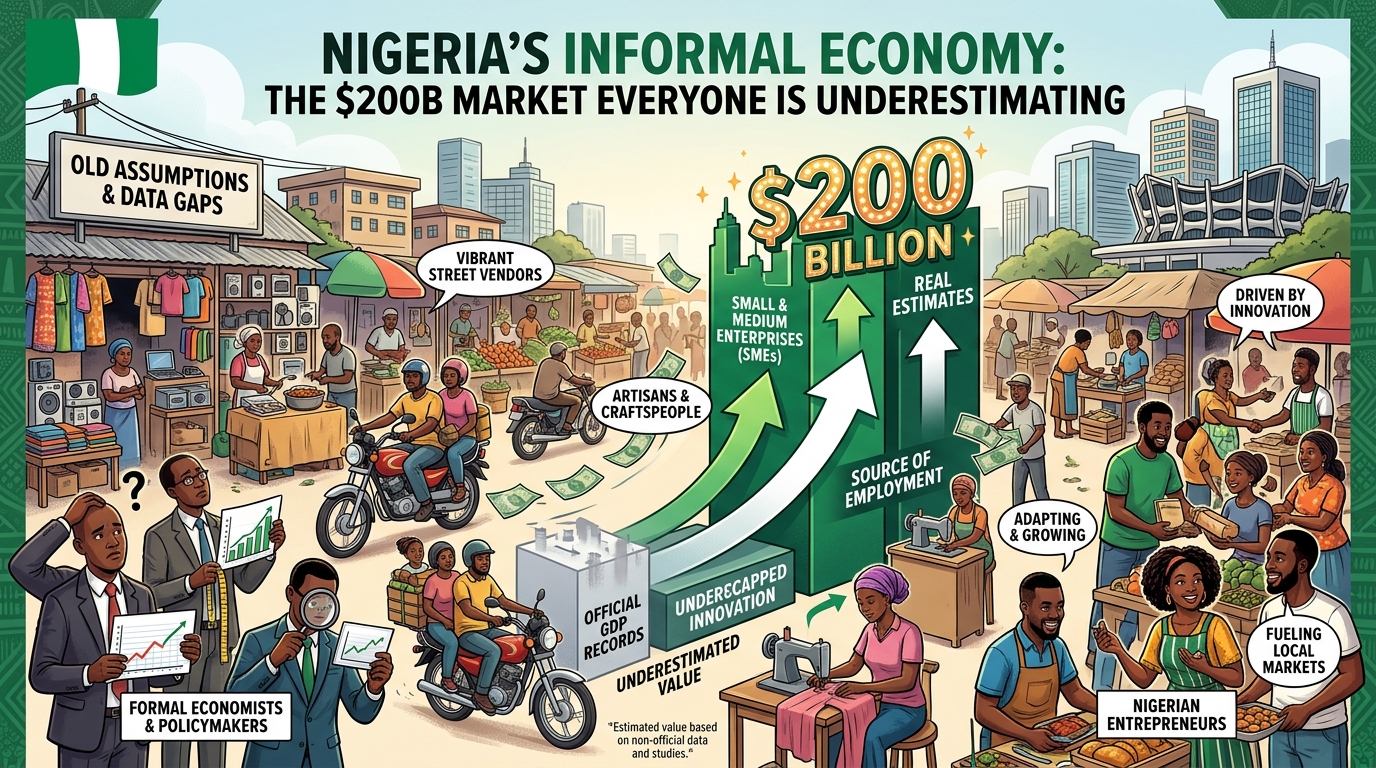
Nigeria’s Informal Economy: The $200B Market Everyone Is Underestimating
Most people look at Nigeria and see the wrong numbers.
They focus on oil prices. Stock market indices. Formal sector employment. But they miss the real engine.
Right beneath the surface of official statistics, a massive economic powerhouse operates. Nigeria’s informal economy represents more than half of the nation’s GDP. It employs the vast majority of the workforce.
This is not a small side market. This is the economy. And it is largely misunderstood, underestimated, and underutilized.
Let me show you the real picture.
Stonehill Research provides Informal Economy Market Intelligence to help investors and policymakers understand Nigeria’s real economy.
Understanding the informal economy: a clear definition
Before we go further, let us define what the informal economy actually means.
Here is the simple version.
The informal economy includes unregistered businesses. Workers without formal contracts. Enterprises that do not keep complete accounting records. Jobs that lack basic social or legal protection.
Importantly, the informal economy does not include illegal activities like drug trafficking or smuggling. It represents legitimate economic activity that simply operates outside formal institutional structures.
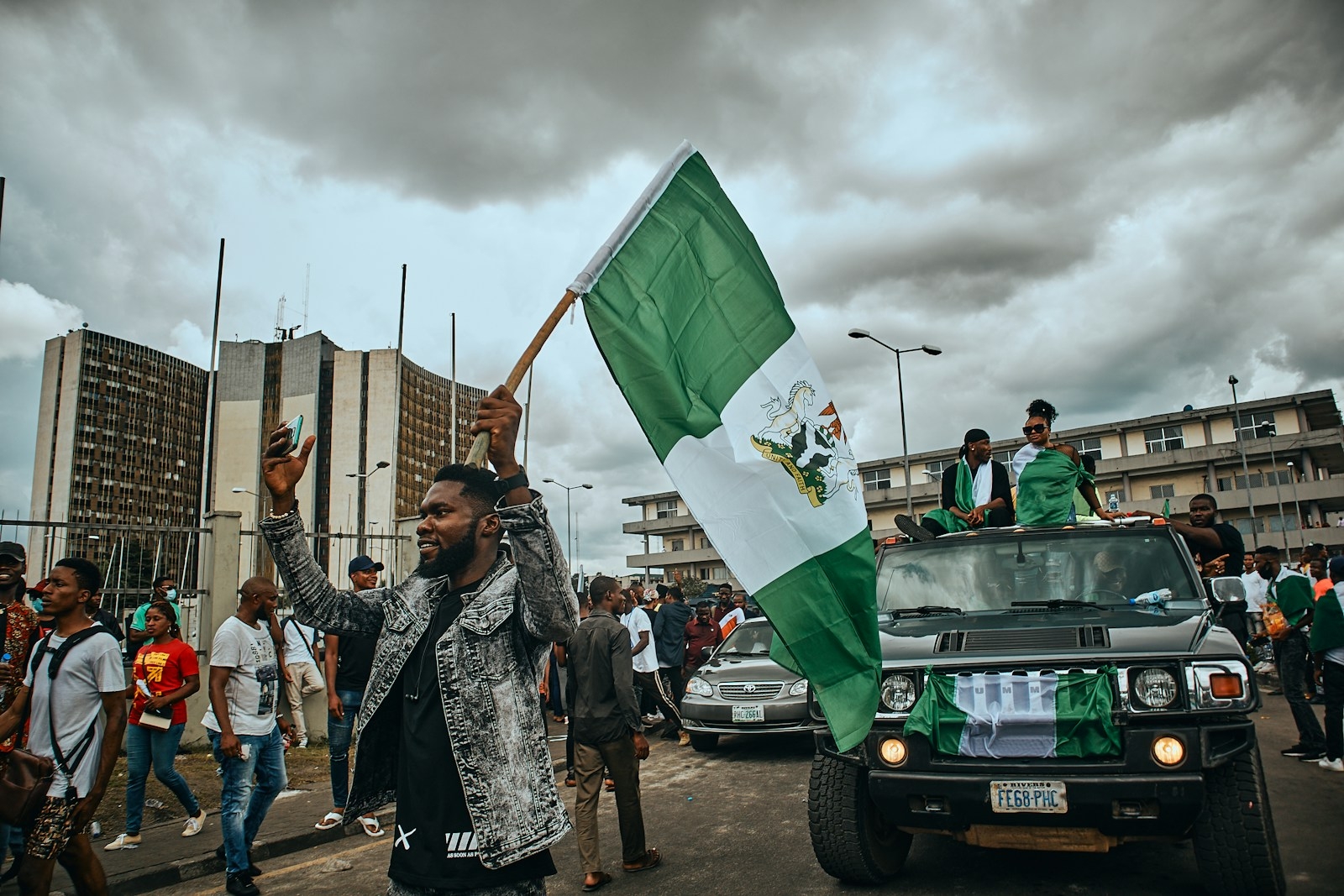
The true scale: Nigeria’s informal economy in numbers
Recent data reveals that Nigeria’s informal economy is far larger than the commonly cited $200 billion figure suggests.
Updated statistics
Revenue versus profit gap. 44% of businesses in Nigeria’s informal economy make less than ₦20,000 in daily revenue. Meanwhile, 38% earn profits below ₦10,000 each day. This stark disparity highlights one of the sector’s fundamental challenges.
Rising operational costs. Around 79% of informal business operators reported that their cost of doing business has increased within the last year. The drivers are primarily higher supplier prices, increased transportation costs, and naira depreciation.
Who powers the informal economy?
A youth-driven enterprise
Understanding the demographics of Nigeria’s informal economy reveals important insights about the country’s economic future.
58% of informal business owners are under 34 years old. The largest group (43%) falls between 25 and 34 years. This youthful demographic represents both an opportunity and a challenge.
Women in the informal economy
The informal sector plays a vital role in women’s economic participation, though challenges remain.
Women-owned businesses comprise 35% of businesses in the informal economy, down from 37% in the previous year. Men account for 65% of ownership. This represents a slight decline in female entrepreneurship within the sector, a trend that warrants attention.
Sectoral breakdown: where the action is
The composition of Nigeria’s informal economy reflects the country’s consumption patterns and entrepreneurial preferences.
Dominant sectors
Retail and trade constitute 44% of the informal economy. Many people earn their living through buying and selling goods in open markets and small shops. The prevalence of retail activities demonstrates the low barrier to entry. Minimal capital requirements and quick startup potential make these enterprises accessible to entrepreneurs with limited resources.
The service sector represents another significant portion, including food and beverage services, fashion and beauty services, transportation services, and agriculture and related activities.
Together, retail, food services, fashion, and agriculture account for nearly 60% of all informal business activity in Nigeria.

The profitability challenge: high revenue, low profits
One of the most striking characteristics of Nigeria’s informal economy is the disconnect between revenue generation and actual profitability.
The revenue-profit paradox
While 72.3% of informal businesses report monthly revenues exceeding ₦1,000,000, a staggering 90% make less than ₦500,000 in monthly profit.
This disparity highlights several structural challenges.
High operating costs. Expenses for supplies, transportation, and informal taxes (market levies) consume a significant portion of revenue.
Pricing pressures. Intense competition in informal markets limits pricing power, forcing businesses to operate on thin margins.
Inefficient operations. Lack of business management training and modern tools results in operational inefficiencies that erode profitability.
Limited scale. Most informal businesses remain small, unable to achieve economies of scale that would improve margins.
The 2025 data reveals that less than 1.3% of informal businesses earn above ₦2.5 million monthly. This underscores how few informal enterprises successfully scale to higher profitability levels.
The payment revolution: from cash to digital
Nigeria’s informal economy is undergoing a significant transformation in how transactions are conducted.
The shift toward digital payments
While 52% of informal business owners still prefer receiving cash payments (for reasons such as safety and ease of doing business), there is a significant shift toward digital payments. Card payments are the most common transaction resolution method at 80.2%, more than four times the rate of online transfers at 19.8%.
This digital transformation presents both opportunities and challenges.
Opportunities. Better financial record-keeping. Improved access to formal financial services. Enhanced customer convenience. Reduced security risks associated with cash handling.
Challenges. Digital infrastructure limitations in rural areas. Transaction fees that impact already thin margins. Digital literacy gaps among some business owners. Concerns about transaction visibility to tax authorities.
Taxation: challenging common misconceptions
One of the most persistent myths about Nigeria’s informal economy is that its participants avoid taxation entirely.
The reality of informal taxation
Contrary to popular belief that Nigerians hate taxes, 89% of businesses in the informal sector report that they pay taxes. However, these payments primarily take the form of market levies and similar charges. They may not flow into official government channels and typically range from ₦3,500 to ₦15,000 annually.
This creates several issues.
Revenue leakage. Tax payments that do not enter official channels deprive the government of resources for public services and infrastructure.
No reciprocal benefits. Informal business owners pay levies but often do not receive commensurate government support or protection.
Multiple taxation. Informal businesses frequently face demands from multiple collection agents, leading to unpredictable and burdensome costs.
Low revenue capture. At 7% of GDP, Nigeria has the fourth-lowest revenue-to-GDP ratio globally, partly due to the challenges of capturing revenue from the informal sector.
Access to finance: the missing link
One of the most significant barriers preventing informal businesses from scaling and formalizing is limited access to financial services.
The credit gap
Despite representing nearly 60% of GDP, informal businesses struggle to access formal credit and financial services.
The barriers include lack of collateral (most informal businesses operate without assets that banks consider acceptable), no credit history (operating outside formal financial systems means no documented credit history), incomplete records (without proper accounting records, banks cannot adequately assess creditworthiness), and risk perception (financial institutions perceive informal businesses as higher risk, leading to restrictive lending terms or outright rejection).
This credit gap forces informal entrepreneurs to rely on personal savings, family loans, or informal lending networks. This limits growth potential and perpetuates the cycle of informality.
Source: Bank of Industry. Economic Development through the Nigerian Informal Sector. https://www.boi.ng/economic-development-through-the-nigerian-informal-sector-a-boi-perspective/ [VERIFY: link active]
Related service: Our Financial Inclusion and Digital Payment Studies help institutions design products for informal sector needs.
The economic impact: why this sector matters
The informal economy’s contribution to Nigeria extends far beyond GDP statistics.
Employment generation
The informal sector serves as Nigeria’s largest employer. It absorbs millions of workers who cannot find opportunities in the formal economy. With approximately 40 million micro, small, and medium enterprises in Nigeria, and 89.4% operating informally, this sector represents the primary source of livelihood for countless families.
Economic resilience
The informal economy demonstrates remarkable adaptability during economic shocks. When formal sector opportunities contract, the informal economy expands to absorb displaced workers. This flexibility provides crucial economic stability and social protection in the absence of comprehensive government safety nets.
Innovation and entrepreneurship
Despite resource constraints, informal entrepreneurs display remarkable creativity in solving problems and meeting market needs. This grassroots innovation, while often overlooked, drives economic dynamism and creates value in ways that complement formal sector activities.
Regional variations: Nigeria’s informal economy landscape
The distribution of informal economic activity across Nigeria reveals important regional patterns.
The Lagos phenomenon
Lagos’s dominant position, accounting for 16% of all informal businesses, reflects several factors.
Population density. As Nigeria’s commercial capital, Lagos attracts entrepreneurs seeking market opportunities.
Infrastructure. Despite challenges, Lagos offers relatively better infrastructure than many other regions.
Market size. The large consumer market supports diverse informal business activities.
Financial ecosystem. Greater proximity to financial services and business support.
Other key states
Following Lagos, Ogun State, the Federal Capital Territory, and Delta State each account for 6% of informal businesses. This geographic concentration suggests that business environment factors including infrastructure, market access, and regulatory predictability significantly influence where informal enterprises choose to operate.
Challenges facing the informal economy
Rising operational costs
The 79% of informal business owners reporting increased costs face multiple pressures.
Supplier price increases. Inflation and supply chain disruptions have driven up input costs.
Transportation costs. Fuel price fluctuations significantly impact businesses that rely on movement of goods.
Currency depreciation. The weakening naira increases costs for businesses that source imported inputs or materials.
Productivity constraints
Several factors limit productivity in the informal sector. Limited technology adoption means many informal businesses operate with minimal technology, limiting efficiency. Skills gaps mean business management and technical skills training remains inaccessible to many entrepreneurs. Infrastructure deficits with unreliable electricity, poor road networks, and inadequate water supply increase operational costs. Market access limitations constrain growth potential.
Regulatory ambiguity
Operating in a regulatory gray zone creates challenges. Uncertain legal status from unclear property rights and business registration requirements creates insecurity. Limited legal protection means informal businesses struggle to enforce contracts or access legal remedies. Harassment from enforcement agents is a reality for some informal business operators.
The path forward: opportunities and recommendations
Despite challenges, Nigeria’s informal economy presents tremendous opportunities.
For policymakers
Create enabling environment for formalization. Simplify business registration processes and reduce costs. Develop graduated compliance frameworks that acknowledge different business capacities. Provide incentives for voluntary formalization rather than punitive enforcement.
Improve infrastructure. Invest in reliable electricity supply. Upgrade road networks and transportation systems. Expand digital infrastructure to support e-commerce and digital payments.
Rationalize taxation. Consolidate multiple levies into transparent, predictable tax systems. Ensure tax revenues support services that benefit taxpayers. Introduce progressive tax structures appropriate for micro and small enterprises.
Enhance access to finance. Support fintech innovations that serve informal businesses. Create credit guarantee schemes to reduce lender risk. Promote alternative collateral frameworks that recognise informal sector assets.
Source: World Bank. Nigeria Informal Economy Policy Recommendations. [VERIFY: source]
For financial service providers
Develop appropriate products. Design financial products specifically for informal business needs. Use technology to reduce transaction costs and increase accessibility. Leverage alternative data for credit assessment.
Expand digital payment infrastructure. Reduce transaction fees to make digital payments more attractive. Improve payment infrastructure in underserved areas. Provide training on digital financial tools.
For development organizations and NGOs
Provide business development support. Offer accessible business management training. Create mentorship programs connecting successful entrepreneurs with newer businesses. Develop sector-specific technical assistance programs.
Facilitate market access. Organize trade fairs and exhibitions for informal businesses. Create linkages between informal producers and formal sector buyers. Support development of cooperatives and business associations.
For informal business owners
Embrace digital transformation. Adopt digital payment systems to improve financial management. Use technology to reach wider markets. Maintain basic financial records to facilitate future formalization.
Invest in skills development. Seek out training opportunities in business management. Develop technical skills relevant to your sector. Join business associations for peer learning.
Consider gradual formalization. Explore the benefits of formal registration. Start by opening business bank accounts. Gradually adopt formal business practices as capacity grows.
Source: Nigerian Economic Summit Group. Informal Sector Integration Report. [VERIFY: source]
The bottom line
Nigeria’s informal economy is not a problem to be solved. It is an economic reality to be understood, supported, and integrated into broader development strategies.
With nearly 60% of GDP and the vast majority of employment generated in this sector, dismissing or marginalizing the informal economy means ignoring the livelihood foundation of millions of Nigerians.
The updated data from 2024 to 2025 paints a picture of a dynamic, resilient, but challenged sector. Young entrepreneurs are creating value and generating employment. Women are finding economic opportunities. Digital transformation is gradually changing how business is conducted.
Yet significant obstacles remain. The revenue-profit gap. Rising costs. Limited access to finance. Infrastructure deficits.
The path forward requires a paradigm shift. From viewing informality as a deviation from the norm to recognising it as a crucial component of Nigeria’s economic ecosystem that deserves targeted support and gradual integration into formal frameworks.
Success will require coordinated action from policymakers, financial institutions, development organizations, and informal business owners themselves.
For investors, researchers, and policymakers willing to look beyond traditional economic indicators, Nigeria’s informal economy represents not just a $200 billion market, but a massive reservoir of entrepreneurial energy, innovation, and untapped potential waiting to be properly understood and strategically supported.
Related services from Stonehill Research
-
Informal Economy Market Intelligence – Comprehensive research on Nigeria’s real economy for investors and policymakers.
-
SME and Micro-Enterprise Opportunity Assessment – Opportunity identification in Nigeria’s informal sector.
-
Policy Impact Evaluation – Assessment of interventions targeting the informal sector.
Recommended reading from the Stonehill Research blog
-
Nigeria Informal Economy Report 2026 – Comprehensive data analysis and market insights.
-
Digital Payments in Nigeria’s Informal Sector – Fintech opportunity analysis and trends.
-
Barriers to Formalization for Nigerian Informal Businesses – Policy recommendations for supporting formalization.
Let’s work together
Stonehill Research provides comprehensive market intelligence and strategic insights on Nigeria’s economy, with particular focus on emerging sectors and underserved markets. Our research helps investors, policymakers, and business leaders make informed decisions based on accurate data and deep market understanding.
Contact us today:
📧 Email: info@stonehillresearch.com
📞 Phone: +234 802 320 0801
📍 Address: 5, Ishola Bello Close, Off Iyalla Street, Alausa, Ikeja, Lagos, Nigeria
Contact Stonehill Research to schedule a consultation.
Let us help you understand Nigeria’s real economy.
Stonehill Research – Your Partner in Market Intelligence
References
-
International Labour Organization (ILO). Definition of Informal Economy. https://www.unescwa.org/sd-glossary/informal-sector-–-ilo [VERIFY: link active]
-
World Economics. Nigeria’s Informal Economy. https://www.worldeconomics.com/National-Statistics/Informal-Economy/Nigeria.aspx [VERIFY: link active]
-
TC Insights. Nigeria’s Informal Economy in Five Charts. https://insights.techcabal.com/nigerias-informal-economy-in-five-charts/ [VERIFY: link active]
-
Nairametrics. Lagos Accounts for 16% Share of Nigeria’s Informal Economy Report. https://nairametrics.com/2025/10/21/lagos-accounts-for-16-share-of-nigerias-informal-economy-report/ [VERIFY: link active]
-
Moniepoint. Informal Economy Report. https://informalreport.moniepoint.com/ [VERIFY: link active]
-
International Monetary Fund. The Informal Economy in Sub-Saharan Africa. https://www.imf.org/en/Publications/WP/Issues/2017/07/10/The-Informal-Economy-in-Sub-Saharan-Africa-Size-and-Determinants-45017 [VERIFY: link active]
-
Bank of Industry. Economic Development through the Nigerian Informal Sector. https://www.boi.ng/economic-development-through-the-nigerian-informal-sector-a-boi-perspective/ [VERIFY: link active]
-
World Bank. Nigeria Informal Economy Policy Recommendations. [VERIFY: source]
-
Nigerian Economic Summit Group. Informal Sector Integration Report. [VERIFY: source]
-
Stonehill Research. Informal Economy Market Intelligence. [VERIFY: source]
There are no comments