

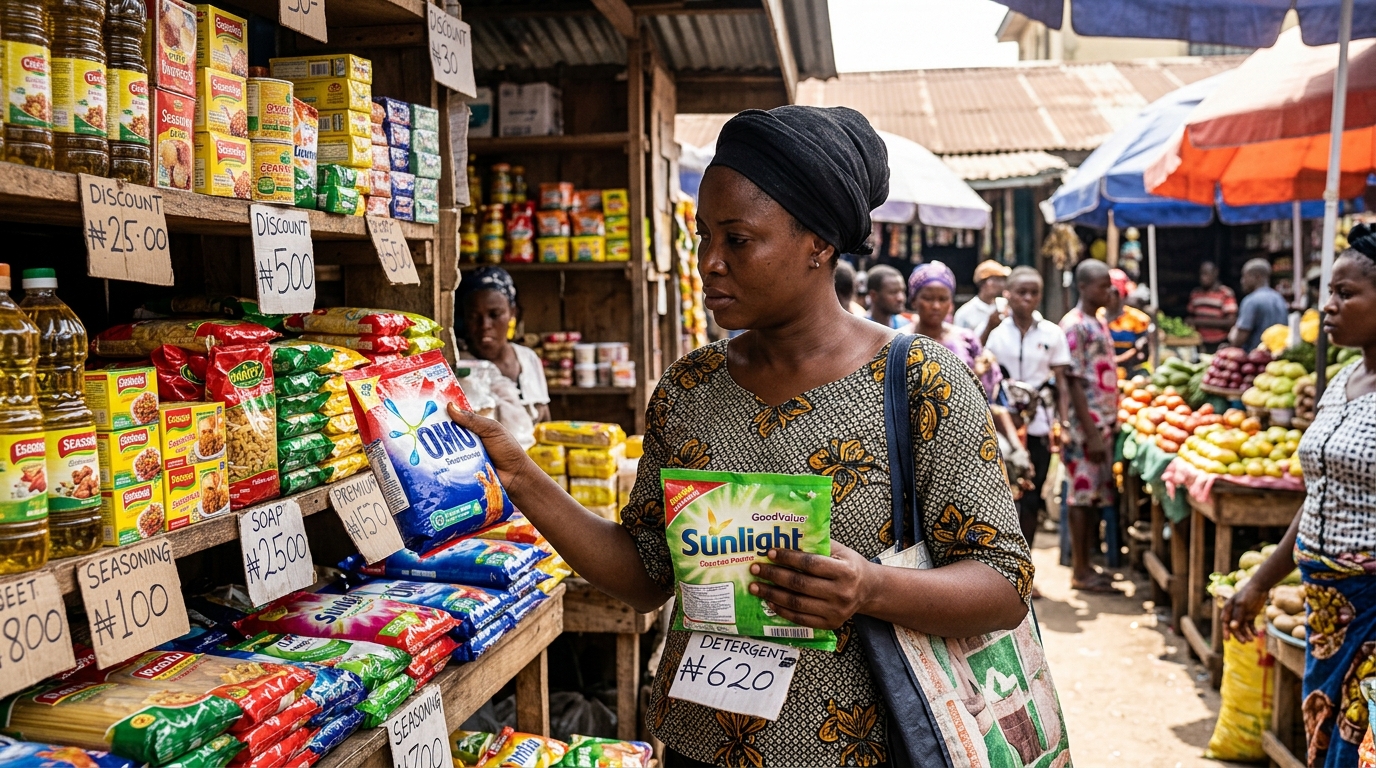
How Inflation Is Changing Brand Switching Behavior in Nigeria
Consumers are changing the way they shop. All over the world.
From Lagos to London, people are rethinking brand loyalty. Inflation is squeezing household budgets. Families are making tough choices between favourite products and financial survival.
For businesses in Nigeria’s consumer market, understanding this shift is essential. Nearly six out of ten Nigerian shoppers have switched brands in the past year.
The question is not whether your customers will switch. It is when and why.
Let me show you what is driving this change and what you need to do about it.
Stonehill Research provides Brand Switching Behaviour Analysis to help businesses understand inflation-driven consumer shifts.
Understanding brand switching: a clear definition
Before we go further, let us define what brand switching actually means.
Definition: According to the Cambridge English Dictionary, brand switching is “a situation in which someone changes from buying one brand of a product to buying a different brand.“
Here is the simple version.
Brand switching happens when a loyal customer stops buying your product and starts buying a competitor’s. It is the opposite of brand loyalty.
This is different from casual shopping. We are talking about customers who had established preferences. People who regularly bought specific products over time. When these loyal customers switch, something serious has changed.
The global inflation context: setting the stage
Understanding the global picture helps explain what is happening in Nigeria.
Economic pressure reaches critical mass
The post-pandemic period has brought sustained inflationary pressure. While rates have cooled from their 2022 peaks, consumers globally still feel the strain.
In the United States, the Consumer Price Index rose 2.4% in the 12 months through May 2025. Food inflation was even higher at 2.9%.
But official statistics only tell part of the story. Consumer perception tells a different tale. 62% of U.S. respondents report that money feels much tighter than a year ago. Only 10% say their financial situation has improved.
The disconnect between stabilizing inflation rates and persistent consumer anxiety has created what economists call a “value-seeking mindset.” It shows no signs of abating.
Brand switching becomes the new normal
This economic pressure has translated directly into brand switching behaviour on an unprecedented scale.
The shift extends beyond just seeking cheaper alternatives. Consumers are employing multiple value-seeking strategies simultaneously.
Deal hunting: 69% of consumers report looking for sales, deals, and coupons more often.
Category reduction: 54% report cutting back on non-essentials.
Channel switching: Approximately 40% of consumers are switching retailers to find better prices.
Nearly 47% of shoppers are actively switching to lower-cost store brands and using coupons more frequently to offset their loss of purchasing power.
Private labels gain unprecedented ground
One of the most significant manifestations of inflation-driven brand switching is the surge in private label adoption.
In the United States, private label sales reached a record $271 billion in 2024, growing 3.9% and outpacing national brand growth (1%) by a significant margin.
Globally, private labels have grown at 2.5 times the rate of national brands over the past year. In Europe, private labels now command 30% of overall market share. In the U.S., they account for 21% of retail sales.
Importantly, this shift is not purely price-driven. Consumer perception of private labels has fundamentally changed. 75% of consumers now say private label products offer good value. 72% view them as strong alternatives to national brands. Even high-income Americans have embraced this shift, with 72% perceiving private labels as viable alternatives.
Read our Global Consumer Trends 2026: Impact on Nigeria for international insights.
Nigeria’s inflation reality: a market under pressure
While global trends provide important context, Nigeria’s specific circumstances create unique dynamics.
The inflation crisis hits home
Nigeria experienced acute inflationary pressure in 2024, with annual consumer price inflation reaching 33.24%. This figure represents one of the highest inflation rates globally.
The inflation crisis was exacerbated by several simultaneous economic shocks.
Fuel subsidy removal. The government’s decision to remove the fuel subsidy in 2023 triggered sharp increases in fuel prices. This cascaded through the entire economy, raising transportation costs, production expenses, and ultimately consumer prices across all categories.
Exchange rate volatility. The unification of exchange rates and free float of the naira led to significant currency depreciation. This dramatically increased the cost of imported goods and raw materials, particularly affecting the Fast-Moving Consumer Goods (FMCG) sector.
CPI rebasing. In 2024, Nigeria rebased its Consumer Price Index from a 2009 base year to 2024, updating the basket from 740 to 934 items. While this rebasing led to a 10.32 percentage point reduction in the official inflation rate (from 34.8% in December 2024 to 24.28% in March 2025), consumers continue to experience elevated cost-of-living pressures.
Nigerian consumers respond: the six-in-ten reality
The impact of these economic pressures on brand switching behaviour has been dramatic.
According to NielsenIQ’s 2025 Consumer Outlook survey, almost six out of ten Nigerian shoppers (approximately 60%) switched brands in the past year. This extraordinary rate of brand switching is higher than many developed markets.
The categories experiencing the highest brand switching rates reveal where price sensitivity is most acute. High switching categories include toothpaste, cooking oil, and laundry products. Lower switching categories include beverages, which show stronger brand loyalty.
This pattern suggests that consumers are more willing to experiment with alternatives in utilitarian categories where functional performance is similar across brands. They maintain loyalty in categories with strong emotional connections or distinct taste profiles.
The trust paradox
Despite widespread brand switching driven by economic necessity, Nigerian consumers maintain a strong emphasis on trust. Nearly 99% of Nigerian shoppers say that trusting the brand they buy from is very or somewhat important to their purchasing decisions.
The key trust factors influencing Nigerian consumers include product quality and consistency as the leading trust factor. Customer service is the second most important trust driver. Transparency is growing in importance in brand evaluation. Recommendations from friends and family remain influential.
Additionally, there is rising interest in brands that reflect local identity and demonstrate social impact. 43% of consumers value diversity and inclusion. 41% prioritise community involvement and locally made products.
This creates a complex dynamic. Consumers are forced by economic circumstances to switch brands based on price, yet they deeply value trust, quality, and local relevance. Brands that can deliver affordability while maintaining these trust factors are best positioned to capture switchers and build new loyalty.

The psychology of inflation-driven brand switching
Understanding the psychological mechanisms behind brand switching helps explain why this behaviour persists.
From loyalty to necessity
Brand loyalty, once considered a stable consumer trait, has proven more fragile than many marketers assumed. When economic pressure intensifies, the psychological contract between consumers and brands undergoes fundamental renegotiation.
Research shows that 71% of consumers confess to brand switching due to shifting priorities, lifestyle changes, or financial circumstances. Brand switching is not always about brand failures. It is often about consumers’ changing realities.
During inflationary periods, this dynamic intensifies. Consumers who previously chose brands based on emotional connection, habit, or perceived quality increasingly prioritise immediate financial relief.
The value recalibration
Inflation forces consumers to recalibrate their understanding of value. Previously, value calculations might have included brand prestige, emotional satisfaction, social signalling, habit and convenience, and perceived quality differences.
Under sustained economic pressure, the value equation simplifies dramatically. Price and functional performance move to the forefront. Emotional and aspirational factors recede. This doesn’t mean they disappear entirely, but their relative weight in purchasing decisions diminishes significantly.
This recalibration explains why high-income consumers, who theoretically can afford to maintain premium brand purchases, also show significant private label adoption. Even consumers with financial capacity are reassessing whether premium prices are justified.
The permanence question
A critical question is whether inflation-driven brand switching represents a temporary adjustment or a permanent behavioural shift. Evidence suggests the latter.
Consumer behaviour researchers note that once consumers successfully switch to a lower-cost alternative and experience satisfactory results, returning to the premium brand requires significant motivation. The switching costs that previously protected incumbent brands now work in reverse, protecting the newly adopted alternatives.
Even as inflation moderates, consumers who have discovered acceptable alternatives at lower prices tend to maintain their new purchasing patterns. The inflation crisis may have triggered the switch, but satisfactory experiences with alternatives sustain it.
Check out Consumer Psychology During Inflation: Nigerian Edition for deeper insights.
Category-specific brand switching patterns
Not all product categories experience brand switching equally.
High switching categories: where price rules
Certain categories show elevated brand switching rates because they meet specific criteria.
Commodity-like products. Products where quality differences between brands are minimal or imperceptible create ideal conditions for switching. Nigerian consumers switching toothpaste brands exemplifies this pattern. The functional outcome of clean teeth is similar across brands at different price points, making the premium price difficult to justify.
Frequently purchased essentials. Categories like cooking oil and laundry products represent regular household expenses where cumulative savings from switching add up quickly. A consumer might save ₦500 per purchase, but buying cooking oil twice monthly translates to ₦12,000 annual savings.
Visible price differences. When price gaps between alternatives are substantial and clearly visible, switching becomes more attractive. Consumers can easily calculate the financial benefit.
Low switching categories: where loyalty persists
Conversely, certain categories maintain stronger brand loyalty even during inflationary periods.
Taste-driven products. Beverages show notably lower brand switching in Nigeria. When taste is a primary attribute and preferences are subjective, consumers are more reluctant to risk dissatisfaction.
Products with learning curves. Categories requiring familiarisation or specific usage knowledge show lower switching rates. Consumers hesitate to abandon products they understand how to use effectively.
Emotionally significant products. Personal care items, certain food brands associated with family traditions, or products tied to self-image show more resilient loyalty.
High-involvement purchases. For expensive, infrequently purchased items, consumers conduct more thorough research and consider factors beyond immediate price.
The private label opportunity
Private labels are particularly well-positioned to capture brand switchers in high-switching categories. Their advantages include transparent value proposition with clear price savings without pretense of premium positioning. Retailer trust transfer means consumers trust retailers to vet quality. Improved quality perception has eroded the “cheap and inferior” stigma. Strategic placement enables direct comparison with national brands.
In Nigeria specifically, the emphasis on locally made products creates additional opportunities for private labels produced domestically. When Shoprite Nigeria reports that over 80% of its assortment is now produced in Nigeria, this local sourcing can be leveraged to appeal to consumers’ desire to support Nigerian manufacturing while offering competitive prices.
Our Private Label Opportunity Assessment helps retailers and brands capture switching consumers.
Geographic and demographic variations
Brand switching behaviour is not uniform across all consumer segments.
Income segmentation
Conventional wisdom suggests lower-income consumers would show the highest brand switching rates. The reality is more nuanced.
Lower-income consumers. These consumers have always practised price-sensitive shopping, often buying based on affordability rather than brand loyalty. Inflation intensifies this existing pattern, but the behavioural change is incremental rather than revolutionary.
Middle-income consumers. This segment shows the most dramatic behavioural change. Previously able to afford preferred brands, inflation squeezes their budgets enough to force trade-offs without completely eliminating discretionary income. They experience inflation as a loss, a reduction in lifestyle quality, making them actively motivated to find cost savings.
Higher-income consumers. Surprisingly, even high-income consumers show significant brand switching behaviour. While financial necessity is less acute, they may switch brands as a matter of principle, refusing to pay inflated prices, or seeking value as a form of smart shopping.
Urban vs. rural dynamics
In Nigeria, geographic location significantly influences brand switching patterns.
Urban consumers have greater exposure to alternatives through modern retail. They enjoy more price transparency via multiple shopping channels and higher media consumption exposing them to promotional messages. They often face higher absolute cost-of-living, intensifying price sensitivity, and show more willingness to try new brands due to cosmopolitan attitudes.
Rural consumers are more dependent on traditional trade with limited brand selection. They show higher brand loyalty partly due to fewer available alternatives, with stronger community influence on purchasing decisions. Traditional trade channels may have less dramatic price differences between brands.
Generational differences
Age cohorts respond differently to inflationary pressure.
Gen Z consumers (born 1996-2010). This demographic shows greater openness to brand switching even before inflation. Less attached to legacy brands, more influenced by social media recommendations, and more willing to experiment with alternatives. About 40% of Gen Z respondents globally express worry about their financial futures, making them particularly price-sensitive.
Millennials (born 1981-1995). Often managing household expenses with families, this cohort feels acute pressure from inflation and actively seeks value. They are digitally savvy enough to research alternatives and compare prices easily, facilitating brand switching.
Gen X and Baby Boomers. Older consumers generally show stronger brand loyalty based on longer histories with preferred brands. However, those on fixed incomes may be forced to switch due to budget constraints.
Business implications: strategies for the new reality
Understanding inflation-driven brand switching behaviour is only valuable if it informs strategic action.
For national brands: defending market share
National brands face the most direct threat.
Value communication vs. price reduction. Rather than immediately cutting prices, emphasise the value proposition. Communicate clearly what consumers get for the premium price. Superior ingredients. Better performance. Sustainability commitments. However, value communication only works if genuine value exists.
Strategic price architecture. Consider offering multiple price tiers within your brand portfolio. A premium line maintains heritage positioning. A mid-tier line competes directly with other national brands. A value line offers a defensive offering to retain price-sensitive customers.
Pack size innovation. When consumers face budget constraints, offering smaller pack sizes at lower absolute prices can reduce switching. A consumer unable to afford ₦5,000 for a large detergent package might remain loyal if offered a ₦1,500 smaller size.
Promotions and loyalty programs. Strategic promotions can temporarily close price gaps with alternatives. Loyalty programs that reward continued purchases can increase switching costs. However, promotional dependency creates risks. Constant promotions train consumers to wait for deals.
Product innovation. Brands that demonstrate continued innovation remind consumers of their value. Introducing new features, improved formulations, or expanded uses can justify premium pricing.
For private labels: capturing switchers
Private labels are the primary beneficiaries of inflation-driven brand switching.
Quality consistency. The biggest risk for private labels is inconsistent quality. One bad experience can send a recent switcher back to trusted national brands.
Strategic positioning. Not all private labels should compete purely on price. A value tier competes on lowest price. A standard tier matches national brand quality at 15-20% lower prices. A premium tier offers unique attributes at competitive prices.
Local manufacturing emphasis. In Nigeria, emphasising local production addresses multiple consumer concerns simultaneously. Supporting Nigerian businesses. Ensuring freshness for food items. Potentially reducing costs through shorter supply chains.
Sampling and trial programs. Switchers face perceived risk trying unfamiliar products. Aggressive sampling programs, money-back guarantees, or “try before you buy” offers reduce switching barriers.
For retailers: managing the mix
Retailers must balance national brands with private labels.
Category management. Determine which categories warrant private label emphasis based on brand switching rates, margin potential, and strategic importance of national brands for category credibility.
Assortment optimisation. During inflationary periods, rationalise assortments to emphasise value-priced options, mid-tier options balancing price and quality, and selective premium options for loyal high-value customers.
Price positioning. Strategic pricing of private labels relative to national brands influences switching behaviour. Too close to national brand prices reduces incentive to switch. Too far below raises quality concerns. The sweet spot typically ranges from 15-30% below national brand prices.
Looking ahead: the future of brand loyalty
As we navigate through 2025 and into 2026, what will brand loyalty look like in a post-inflation world?
The permanent shift thesis
Several factors suggest inflation-driven brand switching represents a permanent reset.
Consumer learning. Consumers who successfully switch to alternatives and experience satisfactory results have learned that premium brands don’t always deliver meaningfully superior value. This knowledge cannot be unlearned.
Habit formation. Repeating a behaviour for an extended period creates new habits. Consumers who have purchased private label products for 18 to 24 months have formed new shopping habits that persist beyond the triggering economic conditions.
Generational values. Younger consumers, particularly Gen Z, entered primary purchasing years during inflationary periods. Their baseline shopping behaviour incorporates price consciousness and brand flexibility as core values.
Improved alternatives. Private labels and value brands have invested heavily in quality improvements, packaging design, and product innovation. The gap between premium and value options has narrowed genuinely, not just perceptually.
Conditional loyalty: the most likely reality
The most probable future involves what we might call “conditional loyalty.”
Loyalty becomes category-specific. Consumers maintain strong loyalty in emotionally significant categories while remaining price-driven in commodity categories.
Loyalty becomes occasion-specific. The same consumer might buy premium brands for special occasions or guests while using value alternatives for everyday family use.
Loyalty becomes value-dependent. Consumers remain open to preferred brands but only when the price gap with alternatives stays within acceptable bounds.
This conditional loyalty creates a dynamic market where brands must continuously earn customer purchases rather than counting on automatic repurchase.
The Nigerian context: unique considerations
While global trends provide important insights, Nigeria’s specific circumstances create unique dynamics.
The FMCG sector under pressure
Nigeria’s FMCG sector faced extraordinary challenges in 2024 that intensified brand switching beyond what inflation alone would cause.
Several major FMCG companies either exited Nigeria entirely or dramatically scaled back operations. Kimberly-Clark Nigeria. Pick n Pay. Diageo selling its stake in Guinness Nigeria. Heineken selling its stake in Champion Breweries. Unilever Nigeria ceasing production of major brands like Sunlight and OMO.
These exits reduced consumer choice in some categories while creating opportunities for local companies to capture market share. However, they also disrupted established brand relationships, forcing switching even among consumers who would have preferred maintaining loyalty.
Infrastructure challenges including power supply issues, poor road conditions, and logistics challenges increase operating costs throughout the value chain. These costs ultimately translate to higher consumer prices.
With 98% of retail occurring through traditional trade channels, brand switching dynamics differ from developed markets where modern retail dominates. In informal channels, brand availability fluctuates more, and switching may sometimes be involuntary.
Cultural factors influencing switching
Nigerian consumer behaviour incorporates cultural elements that moderate or intensify brand switching.
Community influence. The importance of recommendations from friends and family means brand switching can have cascade effects. One respected community member switching brands and sharing positive experiences can influence dozens of others.
Local brand preference. The 41% of consumers who prioritise locally made products represents a significant opportunity for Nigerian-owned brands and locally-produced private labels.
Trust requirements. The 99% of consumers who say brand trust is very or somewhat important reflects Nigeria’s challenging business environment where quality inconsistency and counterfeit products create legitimate concerns.
Opportunities in crisis
Despite the challenges, Nigeria’s inflationary environment creates specific opportunities.
Indigenous brand growth. As multinationals struggle with currency volatility, indigenous companies that understand local conditions and operate with naira-based cost structures gain competitive advantages.
Local manufacturing. The push toward local sourcing creates opportunities for Nigerian manufacturers. Brands that can produce locally while maintaining quality standards benefit from both reduced currency exposure and appeal to consumers’ desire to support local production.
Innovation in affordability. Nigerian companies have pioneered innovations like sachet packaging that make products accessible to low-income consumers. Further innovation in packaging, distribution, and product formulation specifically for affordability can capture switchers.
Our Pricing Strategy and Value Positioning helps brands navigate inflationary markets.
Practical recommendations for Nigerian businesses
Based on the analysis of inflation-driven brand switching behaviour, here are specific, actionable recommendations.
For FMCG manufacturers
Embrace portfolio segmentation. Maintain offerings across multiple price tiers to retain customers who might otherwise switch to competitors entirely.
Invest in local production. Reduce currency exposure and appeal to local preference by maximising Nigerian manufacturing.
Right-size packaging. Develop pack sizes aligned with tight budgets. Sachet and small-format packaging has proven effective in Nigeria.
Communicate value clearly. Actively communicate ingredients, quality controls, performance benefits, or other differentiators that justify the price.
Monitor distributor pricing. Ensure your careful price positioning is not undermined by distributors and retailers adding excessive margins.
For retailers
Develop credible private labels. Invest in quality private label offerings with consistent quality. Start in high-switching categories where consumer risk perception is lower.
Optimise assortment for value. Ensure strong representation of value-priced options without eliminating premium choices entirely.
Strategic promotion. Use targeted promotions to drive trials of private labels or attract switchers from competitors. Avoid constant promotional dependency.
Localise product selection. Stock brands and products relevant to your specific customer base rather than generic assortments.
The bottom line
Inflation has fundamentally reset the relationship between consumers and brands.
The pre-inflation assumption that brand loyalty was relatively stable and that price increases could be passed along with minimal switching has proven dangerously naive.
Today’s reality across Nigeria is one of heightened price sensitivity, reduced brand loyalty, increased willingness to try alternatives, and permanent behavioural shifts that will persist even as economic conditions stabilise. Nearly six out of ten Nigerian consumers have switched brands in the past year.
However, this is not a story of brand loyalty’s death. It is a story of its evolution. Loyalty still exists, but it is now conditional, category-specific, and must be continuously earned rather than assumed. Trust remains paramount, but trust alone is insufficient if prices diverge too dramatically from alternatives.
The winners in this new environment will be brands and retailers that understand price sensitivity is permanent, not temporary. They offer clear value propositions that justify premium pricing where maintained. They develop value-tier offerings to retain customers who otherwise would switch entirely. They invest in quality and consistency to earn trust with switchers. They embrace local production and sourcing to reduce costs and appeal to national pride. They communicate transparently about what makes their offerings worthwhile.
Inflation has changed the rules of the game. Brands that adapt to consumers’ new priorities will thrive. Those that cling to pre-inflation assumptions about loyalty and price tolerance will struggle.
The question is not whether your customers will consider switching. Many already have. The question is whether your brand delivers sufficient value, quality, and trust to deserve their continued business in an era when every purchase decision is reconsidered, every price is scrutinised, and every alternative is evaluated.
Related services from Stonehill Research
-
Brand Switching Behaviour Analysis – Data-driven insights into inflation-driven consumer shifts.
-
Private Label Opportunity Assessment – Capturing switching consumers in high-switching categories.
-
Pricing Strategy and Value Positioning – Navigating inflationary markets with effective pricing.
Recommended reading from the Stonehill Research blog
-
Global Consumer Trends 2026: Impact on Nigeria – International insights for local strategy.
-
Consumer Psychology During Inflation: Nigerian Edition – Deeper psychological insights.
-
Pricing Strategies for Inflationary Markets in Nigeria – Tactical guidance for brand managers.
Let’s work together
Stonehill Research is a leading market research and consulting firm providing comprehensive insights into consumer behaviour, market trends, and economic dynamics across Nigeria and Sub-Saharan Africa. Our research-driven approach helps businesses, policymakers, and development organisations make informed decisions based on reliable data and deep market understanding.
Contact us today:
📧 Email: info@stonehillresearch.com
📞 Phone: +234 802 320 0801
📍 Address: 5, Ishola Bello Close, Off Iyalla Street, Alausa, Ikeja, Lagos, Nigeria
Contact Stonehill Research to schedule a consultation.
Let us help you navigate Nigeria’s evolving consumer landscape.
Stonehill Research – Your Partner in Consumer Intelligence
References
-
Cambridge University Press. Definition of Brand Switching. https://dictionary.cambridge.org/us/dictionary/english/brand-switching [VERIFY: link active]
-
Wall Street Journal. Brand Loyalty Takes a Hit from Inflation. https://www.8451.com/knowledge-hub/insights-and-activation/wall-street-journal-brand-loyalty-takes-a-hit-from-inflation-shortages/ [VERIFY: link active]
-
McKinsey & Company. Consumer Sentiment Tracking 2025. mckinsey.com [VERIFY: source]
-
National Bureau of Statistics (NBS). Nigeria CPI Report 2024-2025. nigerianstat.gov.ng [VERIFY: source]
-
NielsenIQ. Consumer Outlook Survey 2025. nielseniq.com [VERIFY: source]
-
PwC Nigeria. Consumer Insights Survey 2025. pwc.com/ng [VERIFY: source]
-
Harvard Business Review. Consumer Behaviour During Inflation. https://hbr.org/topic/consumer-behavior [VERIFY: link active]
-
Shoprite Nigeria. Local Sourcing and Manufacturing Report. shoprite.com/ng [VERIFY: source]
-
Unilever Nigeria. Portfolio Strategy and Local Manufacturing. unilever-nigeria.com [VERIFY: source]
-
Stonehill Research. Brand Switching Behaviour Index 2025. stonehillresearch.com [VERIFY: source]
There are no comments