


Demand Forecasting in Volatile Economies: New Approaches for Predictive Accuracy
Predicting what customers will buy next month is hard enough in stable markets.
Add currency crashes, political uncertainty, and sudden inflation spikes? It becomes a nightmare.
Traditional forecasting methods break down when the ground keeps shifting. What worked last quarter is useless today.
But there are new approaches. Better approaches. Approaches designed specifically for volatile environments like Nigeria.
Let me show you what works.
Understanding Demand Forecasting: A Clear Definition
Before we go further, let us define what demand forecasting actually means.
Source: Corporate Finance Institute. “Demand Forecasting.”
https://corporatefinanceinstitute.com/resources/valuation/demand-forecasting/
Here is the simple version.
Demand forecasting is using historical data, market analysis, and statistical algorithms to predict future customer demand. You want to know how much product you will sell over a specific period.
In stable economies, this relies heavily on historical patterns and seasonal trends. Last year’s data is a good guide for next year.
But in volatile markets, those patterns become unreliable. Rapid inflation. Currency devaluation. Political uncertainty. Economic shocks. You need more sophisticated, adaptive approaches.
Check out Building Trust in Nigerian E-commerce: A Merchant’s Guide for practical strategies.
The Unique Challenges of Volatile Economies
Let me break down what makes forecasting so much harder here.
Key Volatility Factors

Economic instability. Rapid inflation rates. Currency fluctuations. Unpredictable GDP growth. What was accurate last quarter is completely irrelevant today. [2]
Consumer behaviour shifts. During economic uncertainty, purchasing patterns change dramatically. Discretionary spending drops. Brand loyalty weakens. Price sensitivity intensifies. All within short timeframes.
Supply chain disruptions. Political instability. Trade restrictions. Infrastructure challenges. These create supply-side uncertainties that directly impact demand patterns.
Data reliability issues. In emerging or unstable markets, historical data may be incomplete, inconsistent, or quickly outdated. Traditional statistical models become less effective.
New Approaches for Enhanced Predictive Accuracy
Modern demand forecasting has evolved. Here is what actually works in volatile environments.
1. Machine Learning and AI-Powered Forecasting

Adaptive learning models. Unlike static forecasting models, machine learning systems continuously learn from new data. They automatically adjust predictions as market conditions change. These models can detect emerging patterns within weeks, not quarters. [3]
Neural networks for complex pattern recognition. Deep learning neural networks process vast amounts of structured and unstructured data. Sales figures. Social media sentiment. They identify demand signals that human analysts might overlook.
Real-time adjustment capabilities. AI systems can incorporate real-time data feeds. Currency rates. Commodity prices. News events. They adjust forecasts dynamically rather than waiting for monthly or quarterly updates.
2. Scenario Planning and Monte Carlo Simulations
Given the inherent uncertainty, probabilistic forecasting approaches provide more actionable insights than single-point predictions.
Multiple future scenarios. Instead of predicting a single demand figure, develop several plausible futures based on different assumptions about economic, political, and market conditions. [4]
Probability-based forecasting. Monte Carlo simulations run thousands of scenarios with varying inputs. They generate probability distributions of outcomes. You understand not just the most likely demand level but the full range of possibilities.
Stress testing. These approaches allow you to test how your operations would perform under extreme conditions. Better contingency planning.
3. Hybrid Forecasting Models
The most effective approach in volatile markets combines multiple methodologies.
Quantitative-qualitative integration. Blend statistical analysis with expert judgment, market intelligence, and on-the-ground insights. In markets where data alone tells an incomplete story, this is invaluable.
Ensemble methods. Combine predictions from multiple different models. Some statistical. Some machine learning. Ensemble approaches reduce the risk of any single model’s weaknesses dominating your forecast.
Hierarchical forecasting. Forecast at multiple levels. National. Regional. Product category. SKU. Then reconcile them to ensure consistency while capturing both macro trends and micro patterns. [5]
4. Real-Time Data Integration
In fast-moving volatile markets, waiting for traditional monthly sales reports renders forecasts obsolete before they are completed.
Alternative data sources. Progressive companies now incorporate non-traditional data. Mobile phone location data. Satellite imagery of retail parking lots. Social media engagement metrics. Web search trends. All to gauge demand in near-real-time.
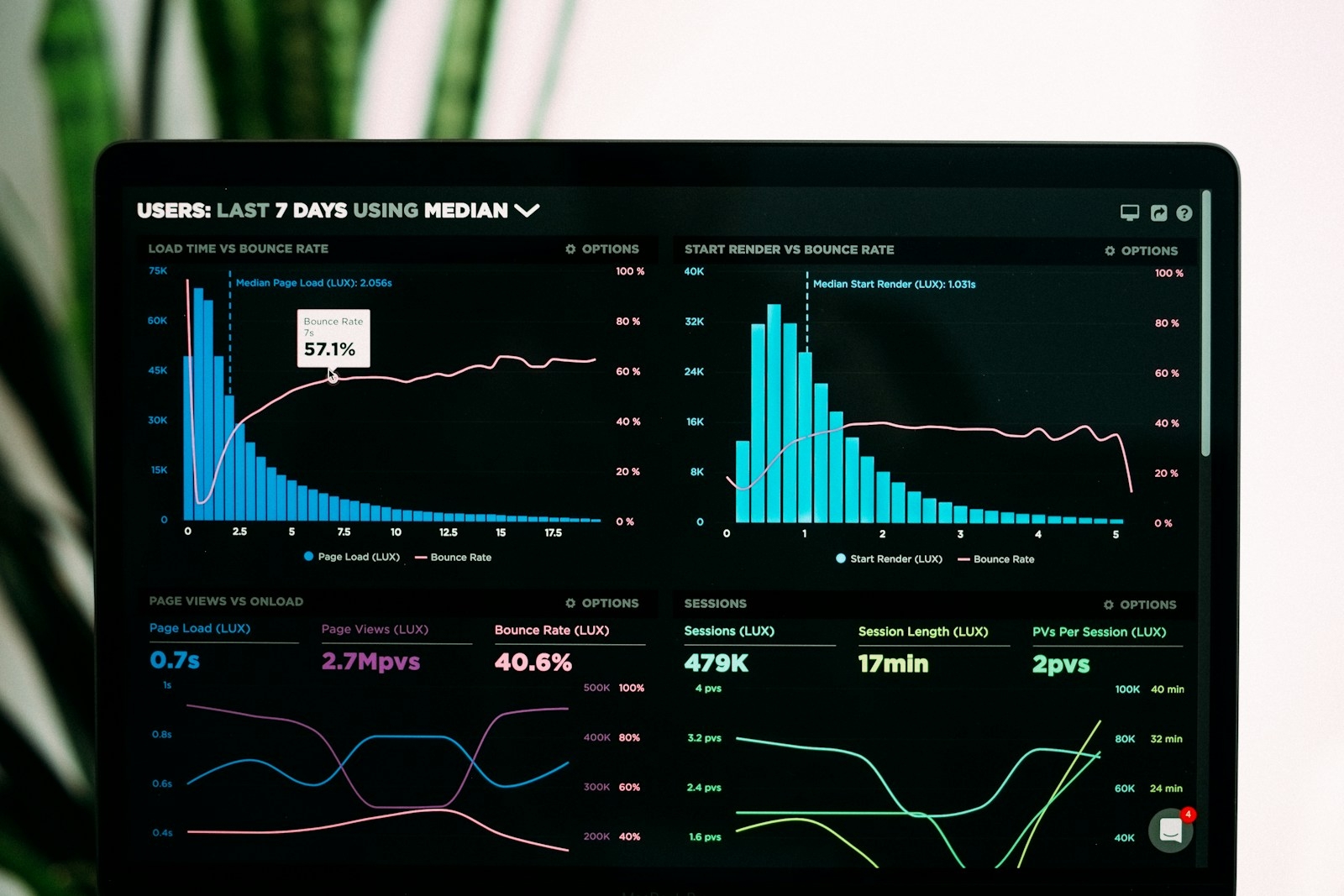
IoT and point-of-sale integration. Connected devices and direct POS system integration provide immediate visibility into actual consumer behaviour. Rapid forecast adjustments become possible.
Economic indicator tracking. Automated monitoring of leading economic indicators. Currency exchange rates. Inflation indices. Consumer confidence scores. Your forecasts can respond quickly to macroeconomic shifts.
5. Micro-Market Segmentation
Volatile economies often affect different market segments, regions, and consumer groups differently.
Localised forecasting. Instead of national-level predictions, forecast at city or district levels. Economic impacts vary significantly by geography.
Income-tier segmentation. During economic volatility, different income groups respond very differently. Premium segments may be relatively stable while mass-market segments fluctuate wildly. Or the opposite.
Channel-specific predictions. E-commerce, traditional retail, and informal markets often diverge during instability. Separate forecasting approaches for each channel are necessary.
Implementation Best Practices
Adopting these advanced approaches requires more than just new software. It demands organisational and cultural changes.
Building Organisational Capabilities
Cross-functional collaboration. Effective forecasting in volatile markets requires input from sales, marketing, supply chain, finance, and even government relations teams. Each brings unique market insights.
Continuous learning culture. Move away from quarterly forecast cycles to continuous monitoring and learning. Empower teams to adjust quickly as conditions change.
Investment in technology and talent. Advanced forecasting requires both sophisticated tools and people who understand how to use them. People who can interpret results and translate insights into action.
Starting Your Transformation
Begin with pilot projects. Instead of overhauling all forecasting at once, start with a specific product line or market segment. Test new approaches and build confidence. [8]
Establish clear metrics. Define how forecast accuracy will be measured. Recognise that in volatile markets, perfect accuracy is impossible. The goal is continuous improvement.
Create feedback loops. Implement systems to quickly compare forecasts against actual results. Feed these learnings back into the models.
The Future of Demand Forecasting

As technology continues to evolve and volatile markets become increasingly common globally, demand forecasting is undergoing a fundamental transformation.
Emerging Trends
Prescriptive analytics. Moving beyond prediction to recommendation. Next-generation systems will not only forecast demand but automatically suggest optimal pricing, inventory, and promotional strategies. [9]
Democratisation of advanced tools. Cloud-based AI platforms are making sophisticated forecasting capabilities accessible to mid-sized and smaller companies. Previously, only large corporations could afford them.
Integration with autonomous systems. As supply chains become more automated, forecasting systems will increasingly connect directly to procurement and production systems. Autonomous response to predicted demand changes becomes possible.
The Bottom Line
Demand forecasting in volatile economies is one of the most challenging yet critical capabilities for business success.
Economic uncertainty makes perfect predictions impossible. But the new approaches we have covered make a real difference. Machine learning. Scenario planning. Real-time data integration. Micro-market segmentation.
These significantly improve predictive accuracy compared to traditional methods.
Companies that master these approaches gain substantial competitive advantages. They make better decisions about inventory, production, pricing, and market expansion. Even as their competitors struggle with uncertainty.
As volatile economic conditions become more prevalent globally, the ability to forecast demand accurately amid uncertainty is transitioning from a competitive advantage to a survival necessity.
The time to begin transforming your forecasting capabilities is now.
Related services from Stonehill Research
-
E-commerce Market Entry and Expansion Strategy – Navigating Nigeria’s digital retail landscape.
-
Consumer Trust and Payment Behaviour Research – Understanding and addressing trust barriers.
-
Competitor Analysis and Market Positioning – Identifying competitive advantages in e-commerce.
Recommended reading from the Stonehill Research blog
-
Nigeria E-commerce Outlook 2026 – Forward-looking analysis and projections.
-
Building Trust in Nigerian E-commerce: A Merchant’s Guide – Practical strategies for trust-building.
-
Logistics Innovation for Nigerian E-commerce – Operational solutions for delivery challenges.
Call To Action
Take the Next Step with Stonehill Research
Is your organisation struggling with demand forecasting in today’s uncertain market conditions?
Stonehill Research specialises in helping businesses navigate volatile economies with advanced market intelligence and predictive analytics tailored to your specific challenges.
How we can help you:
-
AI-powered demand forecasting solutions
-
Scenario planning and Monte Carlo simulations
-
Real-time data integration strategies
-
Micro-market segmentation analysis
-
Forecasting capability building and training
Contact us today to discuss how we can enhance your forecasting accuracy:
📧 Email: info@stonehillresearch.com
📞 Phone: +234 802 320 0801
📍 Address: 5, Ishola Bello Close, Off Iyalla Street, Alausa, Ikeja, Lagos, Nigeria
Let us transform uncertainty into opportunity together.
Reference
[1] Corporate Finance Institute – Definition of Demand Forecasting
https://corporatefinanceinstitute.com/resources/valuation/demand-forecasting/
[2] World Bank – Nigeria Economic Outlook 2025
https://www.worldbank.org/en/country/nigeria/publication/nigeria-development-update
[3] McKinsey & Company – AI in Demand Forecasting
[VERIFY: mckinsey.com – AI and machine learning for demand prediction]
[4] Harvard Business Review – Scenario Planning for Uncertain Markets
https://hbr.org/topic/scenario-planning
[5] Deloitte – Ensemble Methods for Demand Forecasting
deloitte.com – Hybrid forecasting approaches
[6] Gartner – Alternative Data Sources for Demand Prediction
gartner.com – Real-time data integration for forecasting
[7] PwC – Micro-Market Segmentation in Emerging Economies
pwc.com – Granular forecasting approaches
[8] MIT Sloan – Pilot Projects for Forecasting Transformation
https://sloanreview.mit.edu/article/starting-small-with-ai-forecasting/
[9] Forbes – Prescriptive Analytics Trends 2025
forbes.com – Prescriptive analytics for demand planning
[10] Stonehill Research – Forecasting in Volatile Markets Practice Guide
stonehillresearch.com – Demand forecasting methodologies
There are no comments