


How to Start a Steel Foundry Manufacturing Business in Nigeria: Step-by-Step Guide
Introduction
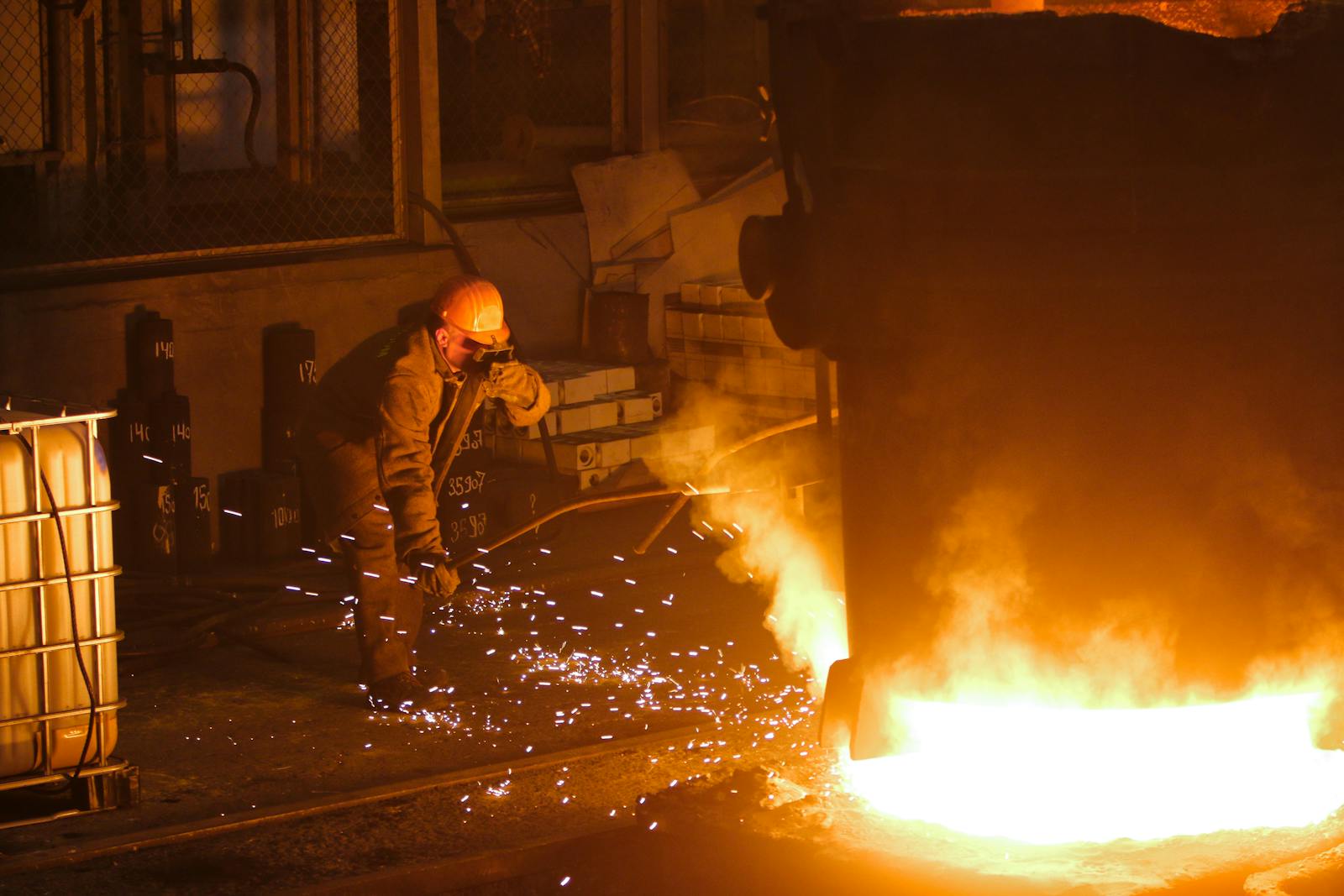
By establishing local foundries, Nigeria can begin to substitute imports with locally produced parts, while simultaneously generating employment across various stages of production; from scrap collection and pattern making to machining, logistics, and quality control. Moreover, the development of local foundries would serve as a training ground for technical talent, fostering the kind of hands-on engineering skills that are often imported alongside finished parts.
As Nigeria’s infrastructure grows, and as domestic manufacturing gains more ground, the demand for cast components will continue to rise. Investors and industrialists who commit early to the foundry space will be well-positioned to meet that demand and grow with the market.
Ultimately, investing in this space means becoming part of the country’s long-term industrial story; one that prioritizes local value creation, skills development, and sustainable growth.
Understanding Steel Foundry
The process begins with sourcing steel scrap or direct reduced iron (DRI), which is melted in furnaces such as induction or arc furnaces. The molten metal is then poured into prepared moulds made from sand, ceramic, or metal. Once cooled and solidified, the casting is removed, cleaned, finished, and tested for quality. Foundries may supply rough castings or finished, machined components depending on the buyer’s need.
Steel castings are widely used because of their strength, durability, and ability to withstand pressure, heat, and mechanical stress. In Nigeria, sectors that depend on these parts include: Construction, Agriculture, Automotive, Energy, etc.
Types of Steel Foundries
Steel foundries can be classified by multiple criteria which are: casting method, steel type, production scale, technology, and product focus. Below is a full breakdown to cover all key types:
- Classification by Casting Method
- Sand Casting Foundries
- Investment Casting Foundries
- Centrifugal Casting Foundries
- Shell Mould Casting Foundries
- Die Casting Foundries
- Classification by Steel Type Used
- Carbon Steel Foundries
- Alloy Steel Foundries
- Stainless Steel Foundries
- Tool Steel Foundries
- Classification by Production Volume and Market Focus
- Jobbing/General Foundries
- Production Foundries
- Specialized Foundries
- Classification by Technology Level and Automation
- Manual Foundries
- Semi-automated Foundries
- Fully Automated Foundries
- Classification by Product Type or Application
- Structural Castings Foundries
- Automotive Castings Foundries
- Agricultural Castings Foundries
- Energy Sector Castings Foundries
- Industrial Equipment Castings Foundries
Steel Products Made in Foundries
Steel foundries produce a wide range of cast parts used in many industries. These products vary in size, complexity, and application but share a common need for strength and durability. They include the following;
- Construction and Infrastructure Parts
- Manhole covers and frames
- Pipe fittings, flanges, and couplings
- Anchor plates and brackets
- Concrete mixer blades and liners
- Crusher parts and crusher jaws
- Agricultural Machinery Components
- Tractor engine housings and blocks
- Plough brackets and discs
- Harrow frames and blades
- Pulley wheels and gearbox casings
- Automotive and Transport Parts
- Brake drums and calipers
- Wheel hubs and suspension arms
- Clutch housings and differential casings
- Gearboxes and engine parts
- Energy Sector Castings
- Turbine casings and bearing housings
- Pump impellers and valve bodies
- Heat-resistant plates and brackets
- Generator frames and mounting bases
- Industrial Machinery Components
- Shafts, gears, and rollers
- Couplings, flywheels, and bearings
- Machine tool bases and frames
- Conveyor parts and press components
- Mining and Heavy Equipment Parts
- Bucket teeth and loader arms
- Excavator parts and crusher components
Market Demand and Supply Gap in Nigeria
The demand for steel castings is rising steadily as infrastructure projects and industrial activities expand. However, the local supply of quality steel cast products remains limited. Most foundries in Nigeria operate on a small scale, with limited technology and capacity. As a result, a large portion of the demand is met through imports from countries like China, India, and Turkey. This reliance on imported castings increases costs, causes delays, and exposes local industries to foreign exchange fluctuations and supply chain risks.
By establishing well-equipped steel foundries, Nigeria can reduce import dependency, improve supply chain reliability, and create jobs. Furthermore, local foundries can offer faster turnaround times, customization for local needs, and cost advantages.
Investors who enter the steel foundry sector now can position themselves to meet a market that is set to grow for years.
Choosing Your Steel Foundry Manufacturing Niche
The niche defines the types of products you will make, the industries you will serve, and the scale of your operations. A clear focus helps you target customers, invest in the right equipment, and build the right skills. However, to make the right choice, you need to consider five key factors which are as follows;
Start with Industry Focus
Consider Product Complexity
Decide Your Production Scale
Match Steel Type and Casting Process
Evaluate Market Access and Competition
Our Advisory
At Stonehill, we advise that new investors entering the Nigerian steel foundry space begin with a jobbing sand-casting foundry focused on construction and agricultural parts.
This niche offers the best balance of market demand, manageable startup cost, production flexibility, and local material availability. It allows you to enter the market with practical, high-demand products such as:
- Manhole covers and pipe fittings for public infrastructure
- Mixer blades, crusher parts, and brackets for construction sites
- Tractor housings, plough parts, and tiller components for agriculture
These products are consistently needed, relatively simple to produce, and mostly imported today; creating an immediate supply gap
In summary, start small, start local, and serve real gaps; particularly in construction and agriculture.
Steel Foundry Manufacturing Process Overview: From Raw Material to Finished Steel Product
Steel casting is a multi-stage manufacturing process. Each stage must be carefully executed to produce parts that are strong, accurate, and cost-effective. Whether you run a small jobbing foundry or a larger production facility, the core process follows the same structure which include the following:
Pattern Making
Core Making
Mould Making
Melting the Steel
Pouring the Molten Steel
Cooling and Solidification
Shakeout and Casting Removal
Fettling and Cleaning
Heat Treatment
Inspection and Testing
Machining and Final Finishing
Packaging and Dispatch
Machinery and Equipment Needed for a Steel Foundry
Setting up a steel foundry requires specific machinery at each stage of the casting process. Below is a breakdown of the essential equipment, organized by production stage:
Pattern and Core Making
- Pattern Shop Tools and Machines
For making wood, plastic, or metal patterns:- Band saw
- Lathe
- Milling machine
- Drill press
- Measuring tools and templates
- Core Making Equipment (for parts with hollow sections)
- Core sand mixer
- Core boxes
- Core oven or dryer (if using baked cores)
Mould Making
- Sand Preparation System
- Sand muller (for mixing sand and binders)
- Sand sieving machine
- Sand storage and hopper system
- Moulding Equipment
- Manual or semi-automatic moulding machines
- Vibrating table (for compacting sand in moulds)
- Moulding boxes (flasks)
- Gating and Riser Tools
- Hand tools for cutting runners, gates, risers
Melting and Metal Handling
- Furnace
- Induction furnace (most common for clean steel melting)
- Alternatively: Oil-fired or electric arc furnace (larger scale)
- Furnace capacity typically ranges from 250 kg to several tonnes
- Ladles and Pouring Systems
- Lip-pour or bottom-pour ladles
- Ladle preheaters
- Overhead monorail crane or jib crane for ladle handling
- Charging and Metal Handling Tools
- Scrap charging bucket
- Tongs and lifting tools
- Metal analysis kit (optional but important for alloy control)
Cooling and Shakeout
- Cooling Area
- Heavy-duty floor space or racks for mould cooling
- Shakeout Equipment
- Vibrating shakeout machine (for separating sand from castings)
- Manual tools or hammers (for smaller setups)
Fettling and Cleaning
- Cleaning Equipment
- Shot blasting machine or sand blasting cabinet
- Grinding machines (pedestal grinders, angle grinders)
- Chipping hammers
- Cutting Tools
- Abrasive cut-off saw
- Oxy-acetylene or plasma cutter (for heavy risers)
Heat Treatment
- Heat Treatment Furnace
- For annealing, normalizing, or tempering steel castings
- Furnace temperature control system
- Quenching Tank
- For cooling after heat treatment (oil or water-based)
Inspection and Quality Control
- Basic Inspection Tools
- Vernier calipers, micrometers, gauges
- Surface defect detection tools (dye penetrant, magnetic particle kits)
- Advanced Testing
- Ultrasonic or X-ray machines (for internal flaw detection)
- Spectrometer (for chemical composition testing)
Machining and Finishing
- Machining Equipment
- Lathe machine
- Milling machine
- Drill press
- Surface grinder
Material Handling and Safety Equipment
- Forklift or hand pallet truck
- Overhead crane or hoist system
- Personal protective equipment (PPE)
- Fume extraction system (if needed)
- Fire safety system (extinguishers, alarms)
Cost of Setting Up a Steel Foundry in Nigeria
The total cost of establishing a steel foundry in Nigeria depends heavily on your production scale, level of automation, and the type of products you plan to manufacture.
Cost Breakdown: Steel Foundry Setup in Nigeria
| Category | Description | Estimated Cost (₦) | ||
| 1. Land and Factory Setup | Industrial land, shed, flooring, offices, fencing | ₦30 million – ₦80 million | ||
| 2. Machinery and Equipment | Furnace, moulding tools, mixers, ladles, shot blaster, grinders | ₦70 million – ₦200 million | ||
| 3. Power Infrastructure | Generator, wiring, panels, stabilizers, backup systems | ₦20 million – ₦60 million | ||
| 4. Raw Material & Initial Stock | Scrap steel, sand, binders, resins, crucibles, PPE | ₦10 million – ₦40 million | ||
| 5. Labour & Technical Team | Initial salaries, training, technical hires, uniforms | ₦5 million – ₦15 million | ||
| 6. Licensing & Professional Fees | CAC registration, factory permits, EIA, tax ID, business plan, advisory | ₦2 million – ₦5 million | ||
| 7. Contingency & Miscellaneous | Delays, installation, customs, logistics, tools, insurance | ₦10 million – ₦30 million | ||
| Total Estimated Cost Range | For small to mid-scale sand-casting foundry in Nigeria | ₦150M – ₦500M | ||
Step-by-Step Guide to Starting a Steel Foundry Manufacturing
Conduct a feasibility study and select product niche
Register business and obtain regulatory licenses
Secure industrial land and power access
Build factory layout and install equipment
Hire and train staff
Set up supply chain for scrap and mold inputs
Begin production and implement QC
Launch sales to target industrial sectors
Step-by-Step Guide to Obtaining All Required Licenses and Permits for a Steel Foundry Manufacturing in Nigeria
Corporate Affairs Commission (CAC)
Steps to Obtain:
• Visit: www.cac.gov.ng
• Conduct a name search and reserve your company name
• Complete the registration form online
• Submit:
• Proposed company name and objectives (e.g., steel casting, metal parts manufacturing)
• Memorandum and Articles of Association
• Valid IDs and passport photos of directors
• Business address and contact info
• Pay CAC filing and stamp duty fees
• Receive Certificate of Incorporation and RC Number
Federal Ministry of Industry, Trade and Investment (FMITI)
Steps to Obtain:
• Visit the FMITI zonal office
• Submit:
• CAC Certificate
• Business plan and product summary
• Valid ID of owner/directors
• Complete registration form and pay processing fee
• Receive Manufacturer’s Certificate
Ministry of Steel Development
Steps to Obtain:
• Contact the Federal Ministry of Steel Development in Abuja
• Submit:
• CAC documents and Manufacturer’s Certificate
• Description of foundry operations and technical setup
• Location details and factory layout
• May require site inspection
• Receive Recognition Certificate as a steel operator
National Steel Council (NSC)
Steps to Obtain:
• Visit NSC office
• Submit:
• Company profile and technical proposal
• Machinery list and production type (e.g., sand casting)
• Staff qualifications and metallurgical focus
• Participate in industry registration or directory
• Receive NSC Acknowledgment as a Steel Foundry Operator
Standards Organisation of Nigeria (SON)
Steps to Obtain:
• Visit: www.son.gov.ng
• Submit:
• CAC documents and product list
• Manufacturing process flow
• Test protocols and quality control system
• SON team may visit the factory for pre-certification audit
• Pay product certification fees
• Receive MANCAP Certificate (Mandatory Conformity Assessment Program)
Nigerian Nuclear Regulatory Authority (NNRA)
Steps to Obtain:
• Visit: www.nnra.gov.ng
• Apply for Radiation Equipment Use Permit (if applicable)
• Submit:
• Details of X-ray/NDT equipment
• Radiation protection plan
• List of trained operators or outsourced NDT firm
• Site inspection and radiation safety review
• Receive NNRA Authorization Certificate
Council of Mining Engineers and Geoscientists (COMEG)
Steps to Obtain:
• Visit: www.comeg.gov.ng
• Submit:
• Profile of metallurgical engineers or geoscientists employed
• Project summary
• Pay COMEG registration and annual fees
• Receive COMEG Accreditation (for staff or firm)
Federal Ministry of Environment / State Ministry of Environment
Steps to Obtain:
• Hire a registered environmental consultant
• Submit:
• Site layout, process flow, and waste plan
• EIA Screening Form
• Pay fees and undergo site inspection
• Submit full EIA report for review
• Receive EIA Certificate or Environmental Compliance Approval
State Ministry of Physical Planning / Urban Development
Purpose: Construction approval for the factory building.
Steps to Obtain:
• Hire licensed architect or engineer
• Submit:
• Building plan
• Site survey
• Fire safety layout
• Pay application and inspection fees
• Receive Building Permit
Metallurgical Inspectorate & Environmental Protection Department (Ministry of Steel Development)
Steps to Obtain:
• Submit:
• Details of your furnace, casting method, and scrap usage
• Workplace layout and protection systems
• Site inspection and audit may follow
• Receive Operational Compliance Approval
State Environmental Protection Agency (SEPA)
Purpose: Local pollution monitoring and industrial waste control.
Steps to Obtain:
• Submit:
• Factory waste management plan
• Water, dust, and solid waste data
• Pay inspection fee
• Receive SEPA Waste Control Clearance
Federal Ministry of Labour and Employment
Purpose: Ensure workplace safety and labour law compliance.
Steps to Obtain:
• Register your workplace under the Factories Act
• Submit:
• Factory location and operations summary
• Worker count and roles
• Undergo factory inspection
• Receive Factory Registration Certificate and safety directive
Fire Service Department (State or Federal)
Purpose: Approve fire safety and control installations.
Steps to Obtain:
• Submit:
• Building layout
• Fire extinguishing and escape plan
• Pay inspection fee
• Receive Fire Safety Certificate
Local Government Business Premises Permit
Purpose: Operate legally within a local government area.
Steps to Obtain:
• Submit:
• CAC certificate
• Tenancy agreement or C of O
• Pay annual permit fee
• Receive Business Premises Approval
Federal Inland Revenue Service (FIRS)
Purpose: Tax Identification Number (TIN) and VAT registration.
Steps to Obtain:
• Visit: www.firs.gov.ng
• Submit:
• CAC certificate
• Director IDs
• Utility bill and address
• Receive TIN Certificate and VAT Number
Steel Foundry Factory Setup in Nigeria
- Site Requirements
| Component | Details |
| Land Size | Minimum of 2 plots (1,000–1,200 sqm); more if large castings or expansion |
| Location Preference | Industrial zone, outskirts of cities |
| Accessibility | Good access road for scrap delivery and product pickup |
| Zoning | Must be approved for industrial/heavy manufacturing use |
- Core Infrastructure
| Facility | Function |
| Production Shed | Steel frame or block structure with high clearance (5–6m) and roof ventilation |
| Melting Bay | Area housing furnace, crucibles, ladles, and charging station; fireproof and heat-resistant |
| Moulding Area | Covered zone for sand mixing, moulding box prep, and core installation |
| Pouring & Cooling Bay | Isolated zone with reinforced flooring for safe pouring and controlled solidification |
| Shakeout & Fettling | Dust-controlled section for breaking moulds and grinding castings |
| Shot Blasting Room | Optional room for mechanical cleaning of surface rust/sand |
| Heat Treatment Bay | For annealing or normalizing furnaces (optional but recommended for strength enhancement) |
| Inspection Area | Quality check, dimensional test station, and visual sorting |
| Machining Workshop | If required, includes lathe, drill, and milling equipment for finishing |
| Raw Material Store | Enclosed and covered zone for steel scrap, sand, resins, and refractory items |
| Finished Goods Store | Dry, secure storage for sorted, packed products ready for dispatch |
- Workflow Layout
Arrange your factory in a linear or U-shaped layout for smoother operation flow.
Suggested flow:
Raw Material Store → Sand Mixing → Moulding → Melting → Pouring → Cooling → Shakeout → Fettling → Heat Treatment → Inspection → Packing
Use separate inlets for raw materials and finished goods to avoid congestion. Maintain safe distances between melting and moulding areas.
- Utilities & Services
| Utility | Specification |
| Power Supply | 100–300 KVA generator + stabilizer (depending on furnace and machine load) |
| Water Supply | Borehole and overhead tank for cooling, cleaning, and sanitation |
| Compressed Air System | For core blowing, cleaning, or operating pneumatic tools (if applicable) |
| Waste Management Zone | Segregated space for sand disposal, slag collection, and dust filtration |
| Fire Protection System | Industrial extinguishers, sand buckets, fire alarm, and emergency exit signage |
| Ventilation & Exhaust | Roof ventilators, localized fume extraction, especially in melting and fettling sections |
- Admin, Safety & Support Facilities
| Facility | Purpose |
| Office & Records Room | Supervisory functions, customer liaison, record-keeping |
| Security Post | 24/7 surveillance of materials and property |
| Locker Room & Wash Area | For workers to change and clean after shift |
| First Aid Station | Equipped with basic medical supplies and emergency contact board |
| Training/Briefing Room | Induction and safety briefings for new staff or visitors |
Location Selection Factors for a Steel Foundry Manufacturing in Nigeria
Choosing the right location is one of the most critical decisions when establishing a steel foundry. It affects your operating costs, supply chain efficiency, regulatory compliance, and long-term competitiveness. Below are the key location factors to consider:
- Proximity to Industrial Scrap Suppliers
A steel foundry depends heavily on a steady supply of scrap metal.
- Locate close to scrap yards, metal markets, or dismantling hubs
- Reduces raw material transport costs and sourcing delays
- Access to Power and Water
Melting operations are power-intensive. Foundries also require water for cooling and cleaning.
- Prioritize sites with stable grid access or industrial estates with dedicated power
- Ensure borehole access or local water distribution for continuous use
- Avoid areas with poor voltage supply or seasonal water shortages
- Near Engineering and Construction Hubs
Steel castings are used in construction, infrastructure, machinery, and fabrication.
- Being near industrial users improves market access and cuts delivery time
- Look for locations with clusters of manufacturers, fabricators, and contractors
- Transport Logistics (Road, Seaport, Buyers)
Efficient transportation of scrap in and castings out is essential.
- Choose areas close to major highways or expressways
- Proximity to ports (Lagos, Onne, Warri) helps if importing equipment or exporting products
- Easier access to your target buyers (construction sites, OEMs, agro plants)
- Zoning Compliance and Environmental Suitability
Steel foundries must operate in zones legally designated for industrial activity.
- Verify land use and obtain zoning clearance from physical planning authorities
- Avoid residential or commercial zones where noise, emissions, or waste may cause conflicts
- Conduct or obtain an Environmental Impact Assessment (EIA)
In summary, an ideal location for your steel foundry balances resource proximity, infrastructure, market access, regulatory approval, and growth potential.
Staffing and Workforce Planning
Core Technical Staff
- Foundry Manager
- Melting Supervisor
- Furnace Operators
- Moulders
- Core Makers
- Pattern Makers
- Casters / Pourers
- Fettlers / Grinders
- Quality Control Officer
- Maintenance Technicians
- Crane / Hoist Operators
- Safety / Fire Officer
Administrative and Support Staff
- Admin Officer
- Finance / Accounts Officer
- Procurement / Storekeeper
- Security Personnel
- Cleaners and Factory Hands
- Logistics and Dispatch Staff
Raw Material Sourcing for a Steel Foundry Manufacturing in Nigeria
Key Raw Materials Needed
- Steel Scrap
- Foundry Sand
- Binders and Additives
- Alloying Elements
- Refractories
- Fuel and Energy
Sourcing Tips
- Local Scrap Markets:
Lagos (Oyingbo, Ladipo), Ogun (Abeokuta), Onitsha, Kano, and Port Harcourt offer abundant scrap supplies. Develop relationships with reliable dealers to secure consistent quality and price. - Sand Suppliers:
Many foundries source sand from river beds or quarries nearby. Test sand quality regularly to avoid casting defects. - Binders and Chemicals:
Available from chemical distributors or specialized foundry suppliers within industrial hubs. - Imported Alloying Metals and Refractories:
Some high-quality alloying elements and refractory materials may need to be imported from China, India, or Europe.
Supply Chain Considerations
- Build multiple supplier contacts to avoid stockouts.
- Negotiate contracts for bulk purchases to reduce cost.
- Ensure transport logistics for heavy and bulky raw materials are efficient.
- Implement quality checks on incoming scrap and sand to maintain product standards.
Funding Options for Starting a Steel Foundry Manufacturing in Nigeria
The following are the funding options you can consider if you want to start a steel foundry manufacturing in Nigeria;
Personal Capital and Equity Partners
Bank of Industry (BOI) Loans
NEXIM and AfDB Facilities
Equipment Leasing or Deferred Payment Models
Investor Pitch Development and Business Plan Advisory
Risk Factors and Mitigation for a Steel Foundry Manufacturing in Nigeria
Power Supply Interruptions
To face this challenge. Invest in reliable generators, consider hybrid solar setups, and maintain fuel reserves.
Raw Material Quality Variability
To mitigate this, build trusted supplier networks, perform regular quality checks, and keep buffer stock.
Environmental and Regulatory Compliance
Ensure you obtain all permits, conduct regular environmental audits, and implement waste management plans to overcome this.
Workplace Safety Hazards
To eradicate this, enforce strict safety protocols, provide PPE, and conduct safety training.
Market Demand Fluctuations
To tackle this, diversify product range, build long-term contracts, and maintain good customer relationships.
Equipment Breakdown and Maintenance
Schedule preventive maintenance, train technicians, and keep critical spare parts to avoid this.
Marketing and Sales Strategy for a Steel Foundry Manufacturing in Nigeria
Identify Target Markets
Focus on sectors with high demand for steel castings such as construction companies, agricultural equipment manufacturers, automotive firms, and energy projects.
Build Strong Customer Relationships
Develop trust through consistent product quality, timely delivery, and excellent after-sales service. Regularly engage with key clients to understand and meet their needs.
Leverage Local and Regional Networks
Participate in industry trade shows, chambers of commerce, and steel or manufacturing associations to increase visibility and access new clients.
Offer Product Customization
Provide tailor-made castings and quick prototyping to meet specific customer requirements. Flexibility can be a strong competitive advantage.
Use Digital and Traditional Channels
Maintain a professional website and social media presence. Use flyers, direct visits, and industry publications to reach different customer segments.
Implement Efficient Distribution
Set up reliable logistics for on-time delivery, especially for bulky and heavy steel products. Partner with transport companies if needed.
Competitive Pricing and Payment Terms
Offer pricing that reflects quality but remains competitive. Provide flexible payment options, including credit for trusted clients.
Reference
Harrison Steel Castings “What is a Steel Foundry.” Retrieved July 9, 2025, from https://www.hscast.com/learning-center/what-is-a-steel-foundry/
Conclusion
Starting a steel foundry in Nigeria offers a strong business opportunity driven by local demand, industrial growth, and import substitution. With the right location, skilled workforce, quality raw materials, and proper licenses, you can build a competitive and sustainable operation. Securing funding and implementing effective marketing will further boost success. Careful planning and adherence to regulations are key to long-term growth in this essential industry.
Call to Action
At Stonehills research Limited, we help entrepreneurs and industrial investors turn concepts into running factories. Our services include:
Business plan development
Feasibility and technical support
Equipment sourcing
Licensing assistance
Staff recruitment and project management
Reach out to us today to start building your steel foundry with confidence and expert guidance.
Contact us to begin
Tel: (+234) 802 320 0801, (+234) 807 576 5799
E-Mail: info@stonehill.com
Office Address: 5, Ishola Bello Close, Off Iyalla Street, Alausa, Ikeja, Lagos, Nigeria.
There are no comments