

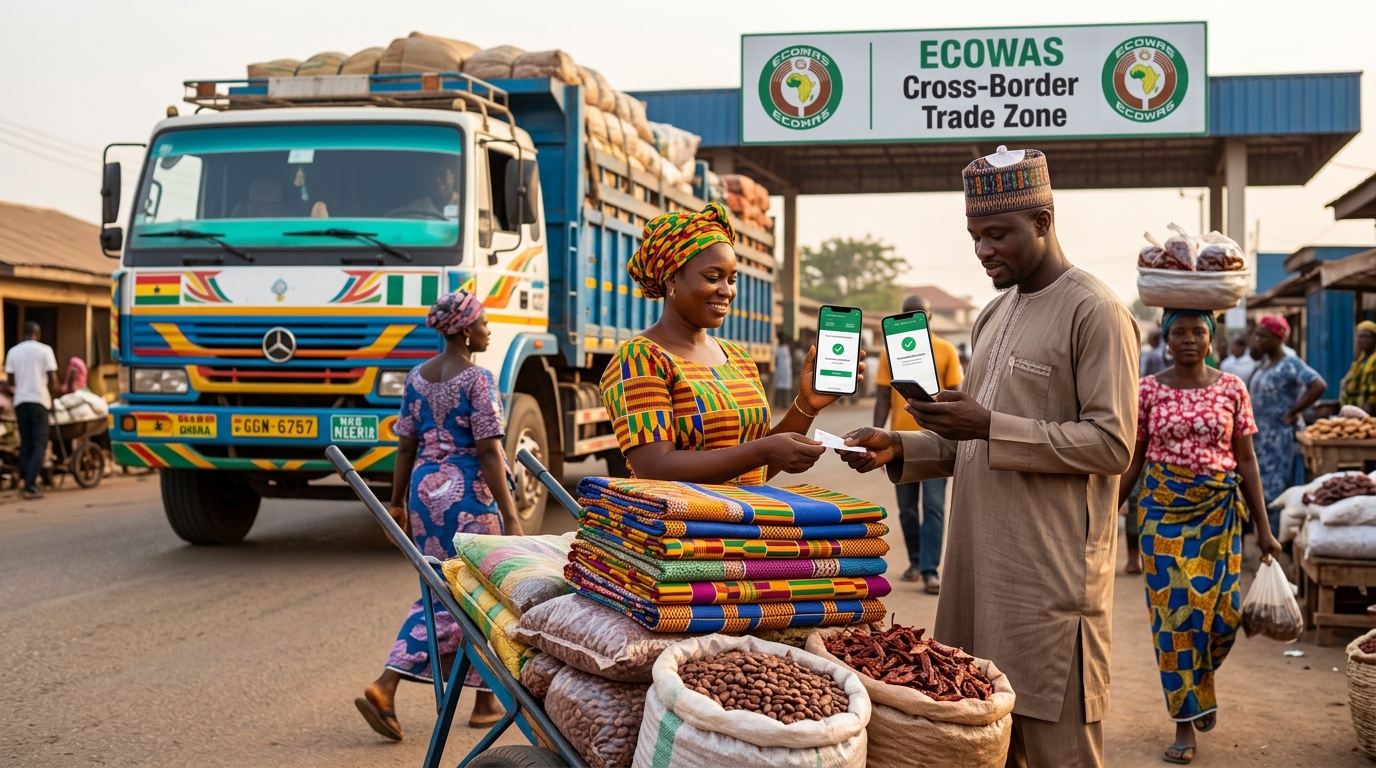
Cross-Border Payments in West Africa: The New Engine of Regional Trade
West Africa is in the middle of a financial revolution.
Mobile money is everywhere. Fintech companies are popping up daily. The way people send money across borders is changing fast.
The numbers are staggering. Africa’s cross-border payments market was worth about 329billionin2025.Itisprojectedtohit1 trillion by 2035.
For regional trade and economic integration, this is huge.
Let me explain what is happening and why it matters for your business.
Understanding Cross-Border Payments: A Key Definition
Before we go further, let us define a fundamental concept that drives much of this ecosystem.
Here is the simple version.
Remittances are money sent by migrants working abroad to their families back home. They pay for food, school fees, healthcare, and small business investments. For millions of West African households, this money is a lifeline.

Globally, remittances to low- and middle-income countries rose by 5.8% in 2024 to 685billion.Buthereistheproblem.Sending200 across African borders costs an average of 7.9%. That is more than double the 3% target set by the Sustainable Development Goals.
The Current State of Cross-Border Payments in West Africa
Let me give you the real picture.
The Fragmented Payment Landscape
But Nigeria tells a different story. Mobile money uptake has been slower. The payment ecosystem is bank-dominated. Regulation is cautious.
The fragmentation goes beyond mobile platforms. Sending money from Ghana to Nigeria still requires intermediaries or third-party apps. Local currency settlements are difficult because everyone relies on USD rails.
This creates friction. Increases costs. Slows transaction speeds.
The Informal Economy’s Dominance
According to Afreximbank’s 2024 Informal Cross-Border Trade report, informal trades in the ECOWAS region are valued at about $5.7 million per month on average.
How do people move this money? Physical cash couriers. Family members. Bus drivers. Cross-border traders carrying money across borders.
These informal methods offer flexibility and speed. But they come with serious risks. Fraud. Theft. Lack of documentation. No legal recourse if something goes wrong.
The Cost Barrier
Sub-Saharan Africa remains the most expensive region to send money to. The average cost was 7.73% in Q1 2024. The global average is 6.35%.

These high fees hurt small businesses the most. MSMEs account for over 90% of jobs on the continent. High transaction costs limit their trade and slow progress toward regional economic integration.
Recent Innovations and Technological Breakthroughs
Despite the challenges, West Africa is innovating fast.
The Rise of Instant Payment Systems
The Central Bank of West African States (BCEAO) recently launched the Instant Payment System (PI-SPI). Transactions now cross borders in seconds. Communities and businesses that were held back by high costs and slow transfers can now move money instantly.
According to AfricaNenda’s State of Inclusive Instant Payment Systems 2024 Report, 31 instant payment systems are already active across Africa. Three of these allow real-time cross-border payments. Momentum is building.
Strategic Partnerships Driving Growth
Money movement company TerraPay partnered with Wave Mobile Money to enhance cross-border remittance services in West Africa. Wave users in Mali can now instantly receive money from multiple transfer operators in the US, Canada, and Europe through a single streamlined integration.
Access Bank Group and Mastercard launched a unified cross-border money movement solution across various African markets in May 2024. Businesses and consumers can now send and receive international payments to and from over 150 countries. The solution leverages Mastercard Move and Access Bank’s Access Africa platform. Instant. Traceable. Seamless. Cost-effective.
The Pan-African Payment and Settlement System (PAPSS)
By early 2025, PAPSS had enabled real-time cross-border payments across 17 countries. It connects 14 national switches and over 150 commercial banks.
Here is the breakthrough. PAPSS allows instant, secure cross-border transactions in local African currencies. No more relying on intermediary foreign exchange. Costs drop significantly.
Recent innovations include integrating PAPSS into mobile banking apps for small and medium enterprises and diaspora remittance corridors. This democratises access to Africa’s integrated financial future.
The Role of Mobile Money and Fintech
Mobile money has been a game changer for financial inclusion.
Mobile Money’s Transformative Impact

In 2022, mobile money platforms processed $837 billion in transactions globally. Africa was responsible for 66% of that volume. Fees are significantly lower than traditional banks. Rates range from 1.5% to 3%.
But success has been uneven. While Ghana and Côte d’Ivoire have embraced mobile wallets, interoperability remains limited. A user in Nigeria cannot easily send money to a user in Benin or Togo using the same mobile platform. Most mobile wallets are restricted to domestic use or require third-party intermediaries.
West African Fintech Innovation
West Africa’s fintech scene is addressing these challenges. Companies like LemFi, Geegpay, and Chipper Cash are gaining significant traction. They offer more localised and cost-effective solutions for cross-border payments.
These companies compete with traditional banks, global remittance giants like Western Union and MoneyGram, and large fintech firms like Wise and Revolut.
The competitive landscape is intensifying. That drives innovation. And pushes costs down. Providers have successfully addressed fragmented networks and interoperability by forging extensive partnerships with other mobile money operators and banks, often leveraging global payment hubs and standardised APIs. [8]
Digital Wallets: The Preferred Payment Method
Consumer preferences are shifting. The PYMNTS Intelligence report “Global Money Movement” found that consumers favour digital wallets for cross-border payments. This trend is especially strong in West Africa, where mobile phone penetration is high and banking infrastructure may be limited in rural areas.
Regulatory Developments and Regional Cooperation
Technology alone is not enough. You need supportive regulations.
The African Continental Free Trade Area (AfCFTA)
AfCFTA offers a once-in-a-generation opportunity to fuel intra-African trade. For trade to happen, payments must be instant, affordable, and accessible to everyone.
The free trade agreement has created momentum for harmonising payment regulations across borders. Reducing barriers to financial integration.
The growth of PAPSS aligns directly with AfCFTA goals. Intra-African trade is expected to increase from 18% to 50% annually by 2030. [9]
Regulatory Challenges and Solutions
The regulatory environment in Africa is highly fragmented. Each country has its own rules on foreign exchange, anti-money laundering requirements, and transaction reporting. This makes it challenging for providers to offer seamless cross-border payment services.
But efforts to harmonise regulations are underway. ECOWAS is working to align KYC rules, AML measures, and consumer protection standards. These initiatives are essential for creating the regulatory certainty that payment providers need to invest in regional infrastructure.
Infrastructure Improvements
Inadequate infrastructure remains a problem. Unreliable internet connectivity. Limited access to financial services in rural areas.
Impact on MSMEs and Regional Trade
This transformation has profound implications for small businesses.
Empowering Small and Medium Enterprises
MSMEs account for over 90% of jobs on the continent. They are the backbone of West African economies. But they have historically been disadvantaged by high transaction costs, slow payment processing, and limited access to formal financial services.
New payment infrastructures are changing this. Kenya Commercial Bank and Equity Bank have produced KCB Connect and Equity Direct to offer faster and more affordable regional transfers. Similar solutions are emerging in West Africa.
Top-tier banks like Nigeria’s Zenith Bank and Ecobank are using specialised trade finance solutions and multi-currency accounts to simplify cross-border business transactions. [10]
Driving Intra-Regional Trade

Efficient cross-border payment systems are essential for boosting intra-regional trade. When businesses can transact quickly, affordably, and transparently across borders, trade volumes increase.
Instant payment systems and reduced transaction costs are already showing promise in increasing trade flows within the ECOWAS region.
Africa’s population is poised to reach 1.7 billion by 2030. That will trigger greater economic growth. Efficient payment systems will be crucial for capturing this demographic dividend.
Looking Ahead: The Future of Cross-Border Payments in West Africa
The trajectory is exceptionally promising.
Market Growth Projections
Drivers include increasing diaspora transfers, fintech innovation, the rise of mobile money, and expanded intra-African trade enabled by initiatives like AfCFTA and PAPSS.
Vision for 2030
The AfricaNenda Foundation envisions that by 2030, over 260 million more Africans will have access to affordable instant payment systems. Progress is happening across West Africa, Central Africa, Southern Africa, and East Africa, where systems are being piloted and interconnected.
This vision encompasses not just technological advancement but also financial inclusion. Over 400 million adults in sub-Saharan Africa are still excluded from the formal economy. Expanding access to digital payment services is both a humanitarian imperative and an economic opportunity.
Remaining Challenges
Let me be honest. Significant challenges remain.
Customer acquisition costs for fintech companies can range from 5to30 per user. Long-term profitability depends on transaction frequency and the ability to cross-sell other financial services. In emerging markets where digital literacy remains low, user education is critical and expensive.
The industry is becoming increasingly crowded. Traditional banks, global remittance giants, and fintech companies are all competing for market share. Competition drives innovation but also creates challenges for smaller players trying to establish themselves.
The Path Forward
For West Africa to fully realise its potential, several conditions must be met.
Continued investment in infrastructure. Reliable internet connectivity and mobile network coverage must reach even the most remote areas.
Interoperability. Mobile money platforms, banks, and fintech companies must collaborate to ensure seamless transfers across different systems and borders.
Financial literacy. Governments and private sector players must invest in educating consumers about digital financial services.
Innovation. Continued experimentation with blockchain, cryptocurrencies, and other emerging technologies could further reduce costs and increase transparency.
The Bottom Line
Cross-border payments in West Africa are undergoing a fundamental transformation.

From the launch of instant payment systems like PI-SPI to the expansion of PAPSS. From strategic partnerships between global payment giants and African banks to the rise of local fintech innovators. The ecosystem is evolving rapidly.
The journey is far from complete. High transaction costs. Regulatory fragmentation. Infrastructure gaps. The dominance of informal payment channels. All continue to hinder progress.
But the momentum is undeniable. And the vision is clear. A West Africa where payments cross borders in seconds. Where MSMEs can compete globally. Where financial services are accessible to all.
As the region moves toward this future, the benefits will extend far beyond convenience. Efficient cross-border payments will unlock prosperity. Drive economic growth. Create jobs. Strengthen the social fabric by enabling diaspora communities to support their families more effectively.
For West Africa, the revolution in cross-border payments is not just about technology. It is about unlocking the region’s vast economic potential. Building a more inclusive, prosperous future for all.
Related services from Stonehill Research
-
E-commerce Market Entry and Expansion Strategy – Navigating Nigeria’s digital retail landscape.
-
Consumer Trust and Payment Behaviour Research – Understanding and addressing trust barriers.
-
Competitor Analysis and Market Positioning – Identifying competitive advantages in e-commerce.
Recommended reading from the Stonehill Research blog
-
Nigeria E-commerce Outlook 2026 – Forward-looking analysis and projections.
-
Building Trust in Nigerian E-commerce: A Merchant’s Guide – Practical strategies for trust-building.
-
Logistics Innovation for Nigerian E-commerce – Operational solutions for delivery challenges.
Call To Action
About Stonehill Research
Stonehill Research is a leading research and consulting firm specialising in African financial markets, fintech innovation, and economic development.
We provide in-depth analysis, market intelligence, and strategic advisory services to help businesses and policymakers navigate the dynamic landscape of African finance.
How we can help you:
-
Cross-border payment market analysis
-
Fintech strategy and entry advisory
-
Regulatory compliance guidance
-
Partner identification and due diligence
-
Consumer insights and market sizing
Are you ready to tap into West Africa’s cross-border payment revolution?
Contact us today:
📧 Email: info@stonehillresearch.com
📞 Phone: +234 802 320 0801
📍 Address: 5, Ishola Bello Close, Off Iyalla Street, Alausa, Ikeja, Lagos, Nigeria
Let us build the future of cross-border payments in West Africa together.
Reference
[1] International Monetary Fund (IMF) – Definition of Remittances
https://www.imf.org/en/publications/fandd/issues/series/back-to-basics/remittances
[2] World Bank – Remittance Flows to Low and Middle-Income Countries 2024
https://www.worldbank.org/en/topic/migrationremittancesdiasporaissues/brief/migration-and-development-brief
[3] Fincra Blog – The State of Cross-Border Payments Within Africa 2025
https://blog.fincra.com/cross-border-payments-africa/
[4] MicroSave Consulting – Cross-border payments in Africa 2025
https://www.microsave.net/2025/07/09/cross-border-payments-in-africa-what-is-changing-and-why-it-matters/
[5] AfricaNenda – State of Inclusive Instant Payment Systems Report 2024
[VERIFY: africanenda.org – Instant payment systems report]
[6] Mastercard – Access Bank Group and Mastercard Cross-Border Payments Partnership
https://www.mastercard.com/news/eemea/en/newsroom/press-releases/
[7] PAPSS – Pan-African Payment and Settlement System Progress Report 2025
papss.com – Cross-border payment system data
[8] Tranglo – Introduction to Cross-Border Payments and Remittances in Africa
https://www.tranglo.com/blog/introduction-to-cross-border-payments-and-remittances-in-africa/
[9] African Continental Free Trade Area (AfCFTA) – Trade Projections 2030
au-afcfta.org – Intra-African trade growth targets
[10] Zenith Bank – Multi-Currency Accounts and Trade Finance Solutions
zenithbank.com – Cross-border business banking
There are no comments