
Building High-Performance Teams in Low-Productivity Environments in Nigeria
Nigeria’s business environment is tough. Everyone knows it.
Power goes out without warning. Internet drops at critical moments. Commutes take hours. The economy shifts constantly.
Yet some Nigerian companies are thriving. Their teams deliver amazing results despite the chaos.
How do they do it?
Let me show you the practical strategies that actually work here.

What Is a High-Performance Team? A Clear Definition
Before we go further, let us define what we are talking about.
Definition: According to Harvard Business School Online, “High-performing teams are characterized by strong leadership, clear goals, effective communication, and a culture of trust and accountability. These teams demonstrate resilience, adaptability, and a commitment to continuous improvement.”
Source: Harvard Business School Online. “What Makes a High-Performing Team?”
https://online.hbs.edu/blog/post/characteristics-of-high-performing-teams
Here is the simple version.
A high-performance team is a group of people with complementary skills. They share a common purpose. They hold each other accountable. And they consistently deliver results that exceed expectations.
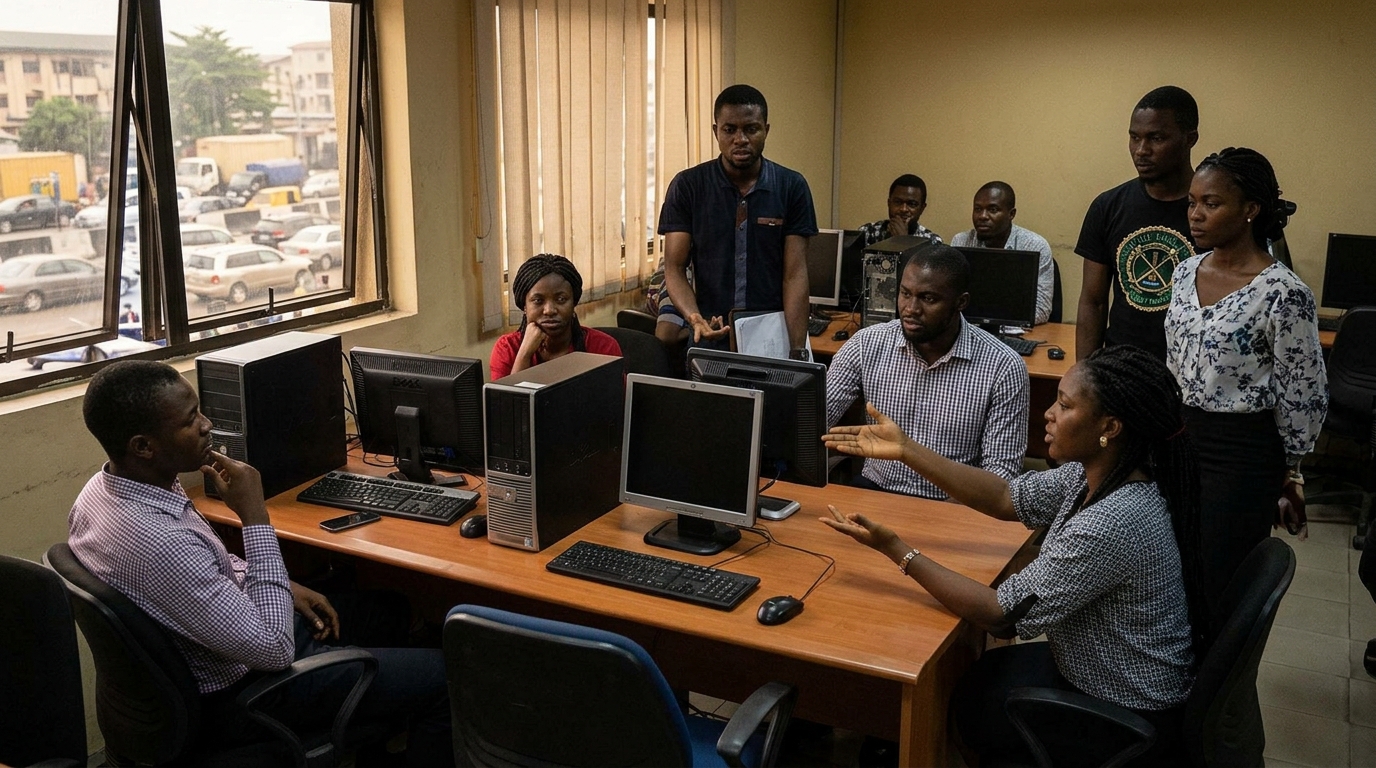
In Nigeria’s low-productivity environment, these teams stand out. They innovate around constraints. They maintain focus despite distractions. They create value with limited resources.
The Nigerian Context: Unique Challenges
Let me be specific about what we are up against.
Infrastructure and Operational Challenges
Power supply is unreliable. Businesses spend huge amounts on generators, inverters, and fuel. Internet connectivity can be inconsistent. Transportation infrastructure leads to long commutes and unpredictable work schedules.
These challenges create operational uncertainty every single day.
Economic and Resource Constraints
Currency fluctuations affect budgets. Inflation eats into purchasing power. Access to capital is limited. Modern tools are expensive.
Resource scarcity demands creative problem-solving. You cannot just throw money at problems.

Cultural and Organizational Factors
Hierarchical structures slow down decision-making. There is often a gap between formal qualifications and practical skills. The hustle culture means many employees manage multiple income streams. This can impact focus and commitment.
Core Strategies for Building High-Performance Teams
Despite these challenges, forward-thinking Nigerian organizations are making it work. Here is how.
1. Strategic Talent Acquisition and Development
Start with the right people. Move away from credential-focused hiring.
Skills-based assessment. Use practical tests and simulations during recruitment. Evaluate candidates’ ability to solve real problems. Do not just look at certificates.
Cultural fit evaluation. Assess resilience, adaptability, and alignment with your values. These traits matter more than perfect grades.
Invest in continuous learning. Create structured development programs. Partner with online learning platforms. Work around infrastructure limitations.
Mentorship programs. Establish internal mentoring systems. Experienced team members guide newer employees. Transfer both technical skills and institutional knowledge. [2]
2. Clear Vision and Goal Alignment
Your team needs a compelling purpose. Something that transcends daily challenges.
Communicate the why. Help team members understand how their work contributes to larger goals and societal impact.
Set SMART objectives. Specific. Measurable. Achievable. Relevant. Time-bound. Keep them realistic given environmental constraints.
Cascade goals effectively. Break down organizational objectives into team and individual targets. Everyone should understand their role.
Regular alignment check-ins. Conduct quarterly strategy sessions. Review progress. Recalibrate goals based on changing circumstances. Celebrate achievements.
3. Technology and Digital Infrastructure
Use technology strategically. It can help you overcome physical limitations.
Cloud-based collaboration tools. Implement platforms like Microsoft Teams, Slack, or Google Workspace. Enable seamless communication and file sharing.
Project management systems. Use tools like Asana, Trello, or Monday.com. Maintain visibility on tasks, deadlines, and progress.
Mobile-first approaches. Many Nigerians access the internet primarily through mobile devices. Ensure all tools are mobile-optimized.
Offline capabilities. Choose software with offline functionality. Work continues during internet outages. Automatic syncing when connectivity returns.
Alternative power solutions. Invest in solar panels, inverter systems, and power banks. Maintain operations during grid failures.
4. Building a Culture of Ownership and Accountability
When external factors constantly derail plans, internal accountability becomes critical.
Empower decision-making. Push authority to appropriate levels. Let team members make decisions within their domains. Reduce excessive hierarchical approval.
Transparent performance metrics. Make team and individual performance data visible. Create healthy peer accountability.
Consequence management. Establish clear consequences for achievement and underperformance. Be consistent and fair.
Celebrate ownership behaviors. Publicly recognize team members who show initiative, take calculated risks, and solve problems independently.
Psychological safety. Create an environment where team members feel safe raising concerns, admitting mistakes, and challenging the status quo. [4]
5. Effective Communication Systems
Communication challenges are amplified when infrastructure issues disrupt normal channels.
Redundant communication channels. Do not rely on a single method. Use multiple channels like WhatsApp, email, and SMS for critical information.
Structured communication protocols. Establish clear guidelines for what information goes through which channels. Set expected response times.
Regular team meetings. Hold consistent weekly team meetings. In-person or virtual. Maintain alignment, address concerns, and build cohesion.
Asynchronous communication. Embrace documentation and async updates. Team members can contribute regardless of connectivity issues or schedule constraints.
Cultural sensitivity. Recognize Nigeria’s diverse cultural context. Respect different communication preferences and languages.
6. Flexible Work Arrangements
The traditional 9-to-5 office model often does not work here. Commute times can exceed two hours. Infrastructure is unpredictable.
Hybrid work models. Combine remote work with strategic in-person collaboration days.
Results-oriented work environments (ROWE). Focus on outcomes and deliverables. Not hours worked or physical presence.
Flexible scheduling. Allow team members to work during their most productive hours. Accommodate personal circumstances and infrastructure realities.
Coworking spaces. Partner with facilities closer to team members’ residences. Reduce commute burden. Maintain professional work environments.
Work-from-home stipends. Provide allowances for internet data, power backup solutions, and home office equipment.
7. Wellness and Work-Life Integration
High performance is unsustainable without attention to wellbeing. Especially in stressful environments.
Mental health support. Provide access to counseling services. Through health insurance or partnerships with mental health platforms.
Reasonable workload management. Actively monitor for burnout signs. Redistribute work to prevent exhaustion.
Encourage boundaries. Model and enforce healthy work-life boundaries. Even during demanding periods.
Physical health programs. Offer gym memberships. Organize group exercises. Provide health screening programs.
Financial wellness. Provide financial literacy training. Consider salary advances or low-interest loans. Reduce financial stress that impacts focus. [6]
8. Recognition and Reward Systems
In resource-constrained environments, non-monetary recognition is important alongside competitive compensation.
Competitive base compensation. Ensure salaries meet or exceed market rates. Reduce attrition and financial distractions.
Performance bonuses. Tie significant portions of compensation to measurable outcomes. Align individual success with organizational goals.
Non-monetary recognition. Implement peer recognition programs. Employee of the month awards. Public acknowledgment of contributions.
Career advancement pathways. Create clear progression routes with defined criteria. Give team members something to work toward.
Professional development opportunities. Offer training, conference attendance, or certification programs as rewards.
Flexibility as a reward. Grant additional flexibility or autonomy to high performers. Recognise this as a valued benefit. [7]
Leadership in Low-Productivity Environments
Leadership becomes even more critical when external circumstances create constant challenges.
Adaptive Leadership Qualities
Resilience. Stay calm and solutions-oriented when facing infrastructure failures, economic shifts, or resource constraints.
Resourcefulness. Innovate around limitations. Find creative solutions with limited resources.
Transparency. Be honest about challenges while maintaining optimism. Builds trust.
Lead by example. Demonstrate the work ethic, attitude, and behaviors you expect from the team.
Cultural intelligence. Respect Nigeria’s diverse ethnic, religious, and regional differences. Build inclusive, cohesive teams.

Decision-Making in Uncertainty
Develop frameworks for making decisions with incomplete information.
Establish clear decision criteria. Empower teams to make decisions at the appropriate level. Learn from outcomes through systematic review processes. Maintain flexibility to pivot when circumstances change.
Balance speed with prudence. Move quickly enough to capitalize on opportunities. Avoid reckless decisions. [8]
Measuring Success and Continuous Improvement
Key Performance Indicators (KPIs)
Track output metrics. Project completion rates. Quality standards. Revenue targets. Customer satisfaction scores.
Track process metrics. Meeting attendance and punctuality. Communication response times. Innovation suggestions submitted. Employee engagement scores. Retention rates.
Track leading indicators. Training hours completed. Peer recognition frequency. Cross-functional collaboration instances. These predict future performance.
Feedback Mechanisms
Implement regular pulse surveys. Gauge team sentiment. Identify issues early.
Conduct quarterly 360-degree feedback sessions. Get comprehensive perspectives on individual and team performance.
Hold retrospective meetings after major projects. Capture lessons learned.
Create open-door policies and anonymous suggestion systems. Give team members safe channels to raise concerns.
Act on feedback received. Show the team their input drives real change.
Continuous Improvement Culture
Dedicate time for process improvement. Encourage experimentation with new approaches. Share best practices across teams. Benchmark against both local and international standards. Stay current with industry trends and emerging technologies.
Case Study Examples: Success Stories from Nigeria
Let me share what is working.
Fintech Innovation
A Lagos-based fintech company built a high-performing engineering team. They implemented fully remote work. They invested heavily in individual power and connectivity solutions for team members. They focused on outcomes rather than hours. They created a culture of ownership with significant engineer autonomy.
The result was a 300% increase in feature releases and industry-leading product innovation. Despite operating in a challenging infrastructure environment.
Manufacturing Excellence
This approach reduced waste by 40% and increased output by 25% within two years.
Professional Services
A consulting firm built a reputation for exceptional delivery. They selected for resilience and problem-solving ability during hiring. They provided comprehensive training in both technical and soft skills. They maintained transparent communication about company performance and challenges. They offered equity participation that aligned long-term interests.
The firm achieved 95% client retention and became an employer of choice in its sector. [10]
The Bottom Line
Building high-performance teams in Nigeria’s low-productivity environment is challenging. But it is far from impossible.
The key lies in acknowledging constraints while refusing to be defined by them.
Organizations that succeed invest strategically in their people. They leverage technology intelligently. They build cultures of ownership and accountability. They demonstrate adaptive leadership.
The strategies we have covered provide a roadmap. Competency-based hiring. Clear goal alignment. Flexible work arrangements. Continuous improvement systems.
As Nigeria’s economy continues to evolve, the organizations that master high-performance team building today will be tomorrow’s market leaders.
The question is not whether your organization can build a high-performance team in a challenging environment. It is whether you are willing to make the systematic investments and cultural changes necessary to make it happen.

The potential returns in productivity, innovation, employee satisfaction, and competitive advantage make the effort not just worthwhile, but essential for long-term success.
Related services from Stonehill Research
-
E-commerce Market Entry and Expansion Strategy – Navigating Nigeria’s digital retail landscape.
-
Consumer Trust and Payment Behaviour Research – Understanding and addressing trust barriers.
-
Competitor Analysis and Market Positioning – Identifying competitive advantages in e-commerce.
Recommended reading from the Stonehill Research blog
-
Nigeria E-commerce Outlook 2026 – Forward-looking analysis and projections.
-
Building Trust in Nigerian E-commerce: A Merchant’s Guide – Practical strategies for trust-building.
-
Logistics Innovation for Nigerian E-commerce – Operational solutions for delivery challenges.
Call To Action
About Stonehill Research
At Stonehill Research, we specialise in helping Nigerian organizations unlock their full potential. We provide strategic research, organizational development, and people-focused solutions.
We understand the unique challenges of operating in Nigeria’s business environment. We provide practical, context-appropriate strategies that drive real results.
How we can help:
-
Team Performance Audits: Assess your current team dynamics, identify bottlenecks, and provide actionable recommendations
-
Leadership Development Programs: Equip your leaders with skills to drive performance in challenging environments
-
Custom Training Solutions: Design and deliver training programs tailored to your organization’s specific needs
-
Organizational Culture Consulting: Help you build a culture of accountability, ownership, and excellence
Ready to transform your team’s performance?
Contact us today:
📧 Email: info@stonehillresearch.com
📱 Phone: +234 802 320 0801
📍 Address: 5, Ishola Bello Close, Off Iyalla Street, Alausa, Ikeja, Lagos, Nigeria
Schedule a free 30-minute consultation to explore how we can support your team development journey.
Let us build something exceptional together.
Reference Links
[1] Harvard Business School Online – Definition of High-Performing Teams
https://online.hbs.edu/blog/post/characteristics-of-high-performing-teams
[2] McKinsey & Company – Talent Management in Emerging Markets
mckinsey.com – Talent acquisition strategies for Africa
[3] World Bank – Digital Infrastructure in Nigeria Report
https://www.worldbank.org/en/country/nigeria/publication/digital-economy-nigeria
[4] Google – Psychological Safety Research
https://rework.withgoogle.com/guides/understanding-team-effectiveness/steps/introduction/
[5] International Labour Organization – Flexible Work Arrangements in Africa
ilo.org – Remote work and hybrid models in developing economies
[6] World Health Organization – Mental Health in the Workplace
https://www.who.int/teams/mental-health-and-substance-use/promotion-prevention/mental-health-in-the-workplace
[7] Gallup – Recognition and Employee Engagement
https://www.gallup.com/workplace/236441/employee-recognition-low-cost-high-impact.aspx
[8] Harvard Business Review – Decision-Making in Uncertainty
https://hbr.org/topic/decision-making
[9] MIT Sloan – Continuous Improvement Culture
mitsloan.mit.edu – High-performance team best practices
[10] Nigerian Economic Summit Group – Productivity in Nigerian Workplaces 2024
nesgroup.org – Workplace productivity research
There are no comments