

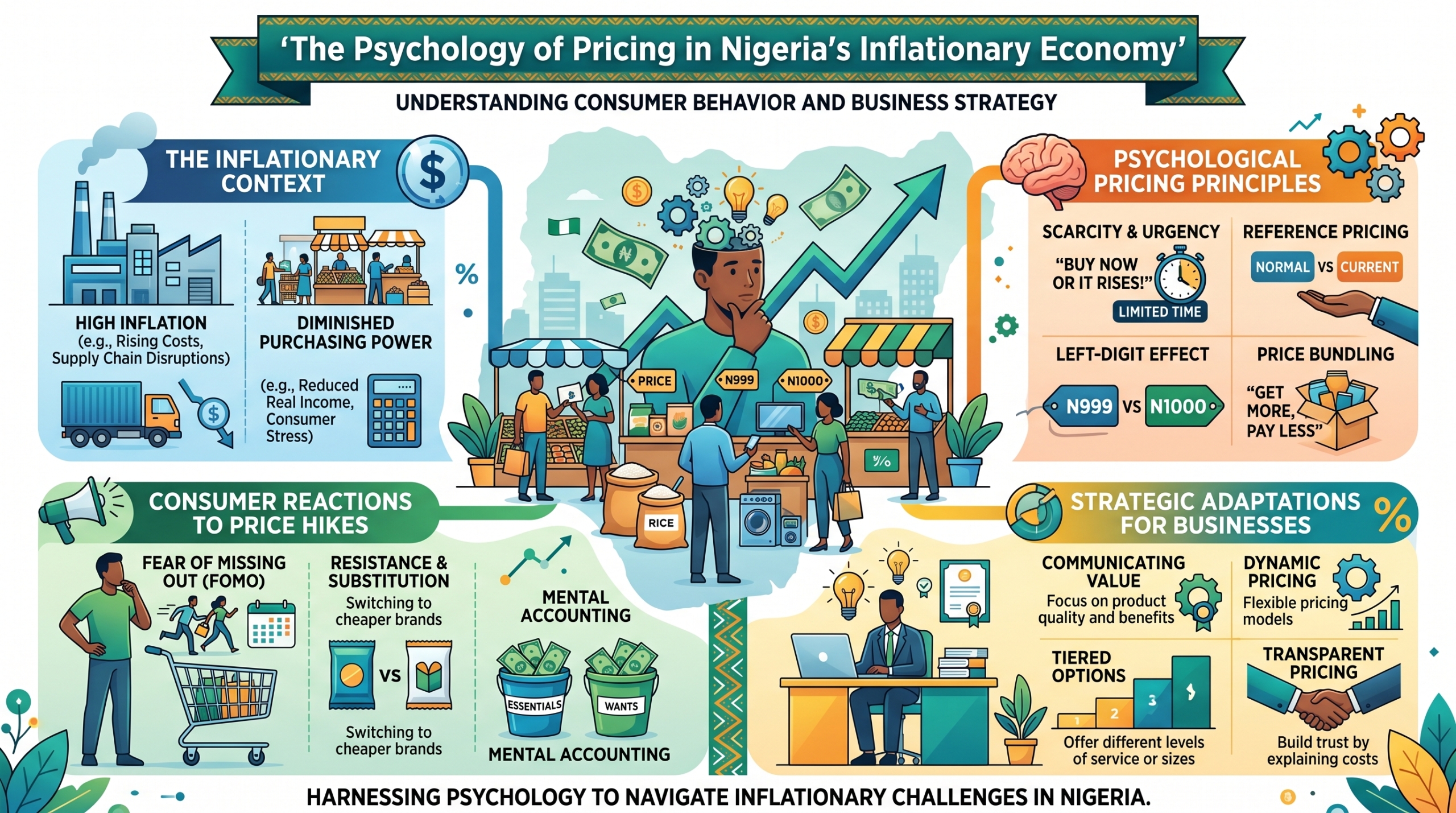
The Psychology of Pricing in Nigeria’s Inflationary Economy
Prices keep going up. Your customers notice.
Every trip to the market brings new numbers. Higher fuel costs. More expensive food. Bigger transport fares. Nigerian businesses face an impossible choice. Raise prices and risk losing customers. Keep prices and lose margins.
But there is a better way. Understanding how consumers think about price can help you navigate inflation without destroying customer loyalty.
Let me walk you through the psychology of pricing in Nigeria’s challenging economy.
Understanding price perception in Nigeria’s economic climate
According to Investopedia, price sensitivity measures “how much the demand for a product changes when there is a change in the price of that product.”
That was formal. Sorry.
Here is the real talk. In Nigeria’s current inflationary economy, price sensitivity has intensified dramatically. Consumers are more cautious with their spending and more strategic about where they allocate their squeezed budgets.
Nigerian consumers today are experiencing inflation fatigue. This is a psychological state where repeated price increases create heightened anxiety, reduced purchasing power, and fundamental shifts in buying behaviour.
Think of it like this. Every time a customer sees a price increase, it stings a little more. After enough stings, they stop trusting that any price is fair.
The anchor effect: setting price expectations
The anchor effect is one of the most powerful psychological principles in pricing.
This cognitive bias causes consumers to rely heavily on the first piece of information they receive when making decisions. In Nigeria’s inflationary environment, this principle becomes especially relevant as businesses navigate frequent price adjustments.
When introducing price increases, which have become inevitable for many Nigerian businesses, the way you present changes matters significantly. If you must increase your product price from ₦5,000 to ₦7,000, displaying the old price alongside the new one can actually work in your favour. Consumers see the ₦5,000 as an anchor, making the ₦7,000 seem more reasonable than if presented in isolation.
Smart Nigerian retailers have adapted this strategy by displaying previous price tags that show the old amount crossed out, with the new price prominently displayed. This transparency builds trust and leverages anchoring to make the new price more acceptable.
Banks and fintech companies have similarly adopted this approach when adjusting transaction fees, showing customers the comparison between old and new rates alongside explanations of economic factors driving the change.
The key is timing and context. With Nigeria’s inflation affecting everything from fuel to food, consumers understand that prices must adjust. By anchoring appropriately and providing context, businesses can maintain customer relationships even during necessary price increases.
The power of charm pricing in the Nigerian market
Charm pricing, the practice of ending prices in 9 or 99, remains remarkably effective in the Nigerian market despite inflation.
Research consistently shows that prices ending in 9, such as ₦4,999 instead of ₦5,000, are perceived as significantly lower than they actually are. The difference is minimal, but the perception is powerful. Consumers process prices from left to right, giving disproportionate weight to the first digits.
In Nigeria’s current economic environment, this strategy has evolved. E-commerce platforms like Jumia and Konga extensively use charm pricing, with products listed at ₦9,999, ₦19,990, or ₦49,999 rather than round figures. Physical retailers from supermarkets to fashion boutiques have followed suit.
Interestingly, Nigerian consumers have shown a particular responsiveness to prices ending in 500 or 900 for mid-range products. These create a perception of calculated, fair pricing rather than arbitrary rounding. For premium products, however, round numbers like ₦50,000 instead of ₦49,999 can signal quality and prestige.
The effectiveness of charm pricing has not diminished with inflation. If anything, it has become more important as consumers scrutinise every purchase more carefully. The perceived discount, however small, provides psychological reassurance when every naira counts.
Our Price Sensitivity Testing service helps businesses find the optimal price points for their products.
Price framing: helping customers justify purchases
Price framing involves presenting your pricing in ways that emphasise value and make purchases feel more justifiable.
One powerful framing technique is the cost per use approach. Rather than presenting a ₦20,000 product as a single large expense, Nigerian businesses are increasingly breaking down costs to show daily or per use value. A gym membership might be framed as “just ₦500 per day” rather than “₦15,000 per month,” making it seem more affordable.
Another effective framing strategy involves comparison with alternative spending. Nigerian telecom companies have mastered this by comparing data bundle costs to other daily expenses. “For less than your daily transport fare, get unlimited weekend data.” This reframes the purchase from an abstract number to a familiar, acceptable trade-off.
Bundling has also emerged as a crucial framing tool. By packaging multiple products together at a single price, businesses help consumers justify purchases they might otherwise defer. Nigerian supermarkets now offer family bundles where the combined price seems more reasonable than individual items.
The key to successful price framing in Nigeria’s inflationary environment is empathy. Businesses must understand the genuine financial pressures their customers face and frame prices in ways that acknowledge this reality while demonstrating clear, tangible value.
The decoy effect: strategic product positioning
The decoy effect is a sophisticated pricing psychology principle. Introducing a third option makes one of the original options more attractive.
Here is how it works. A Nigerian quick service restaurant offers two meal sizes. Small for ₦2,000. Large for ₦4,000. Many price-conscious consumers might choose the small option. But by introducing a medium size at ₦3,500, the large suddenly appears to offer much better value. Only ₦500 more than medium but significantly more food. The medium serves as a decoy that makes the large more appealing.
This strategy has been deployed effectively across Nigerian industries. Streaming services offer three subscription tiers where the middle option makes the premium tier seem like a bargain. Real estate developers present property options where a strategically priced middle option makes the higher-end property seem more reasonable.
Even street vendors have adapted this principle, offering small, medium, and large portions where the pricing structure nudges customers toward larger purchases.
For the decoy effect to work in Nigeria’s current market, the pricing must still respect consumers’ genuine budget constraints. The goal is not to trick customers but to help them see value in options they might otherwise overlook.
Payment plan psychology: making purchases accessible
As inflation has eroded purchasing power, payment flexibility has evolved from a nice-to-have feature to an essential business strategy.
The psychology behind payment plans is straightforward but powerful. Consumers are more willing to commit to purchases when the immediate financial impact is reduced, even if the total cost remains the same or is slightly higher.
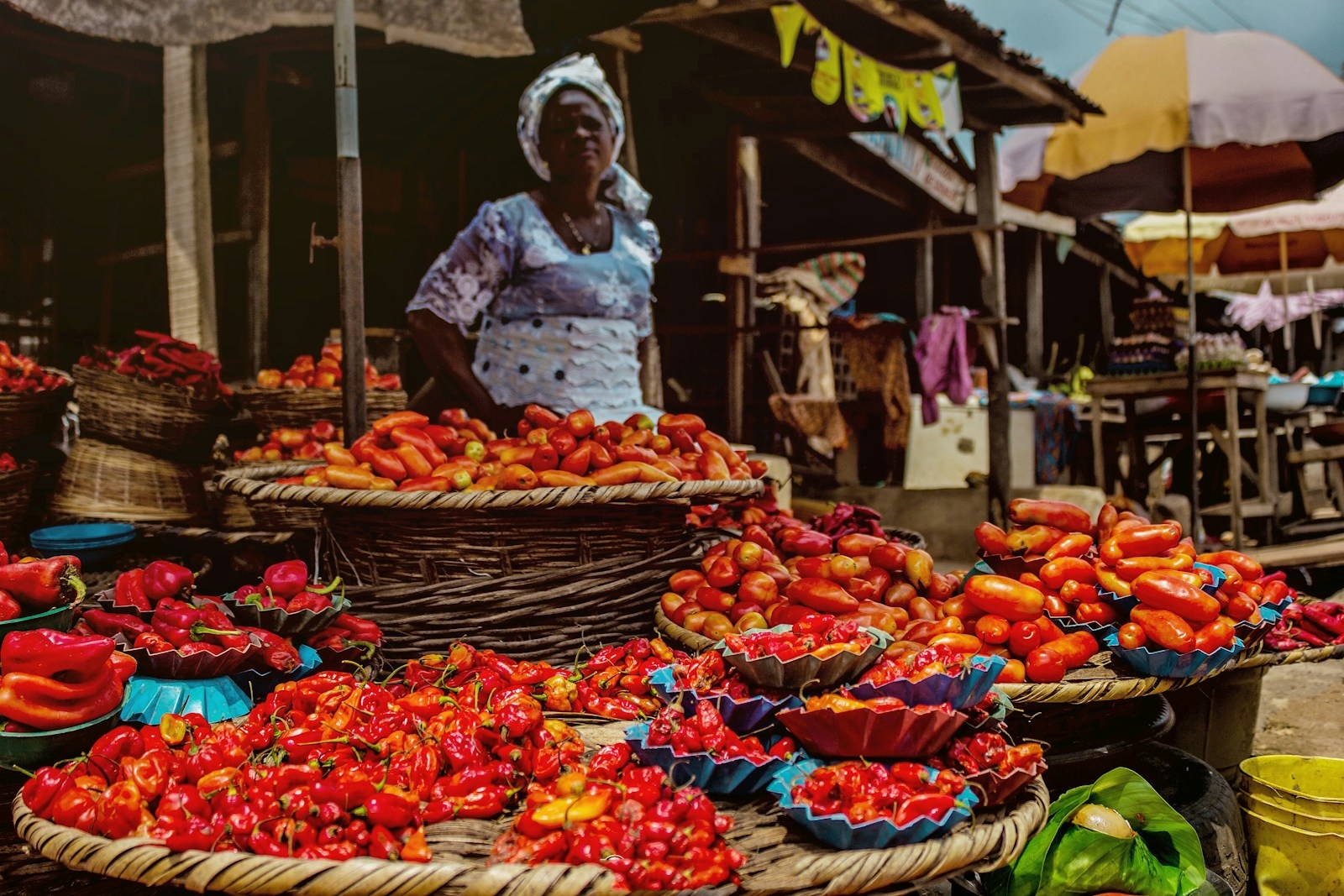
Nigerian businesses across sectors have embraced this reality. Retailers now partner with platforms like Carbon, Specta, and Renmoney to offer instant buy now, pay later options at checkout. Electronics stores advertise products with monthly payment amounts more prominently than total prices.
The psychological appeal is multifaceted. Smaller regular payments feel more manageable than large lump sums, reducing the pain of paying. Payment plans create psychological commitment. Once consumers make the first payment, they are more likely to complete the purchase. In an inflationary environment, paying over time can actually be financially advantageous as the real value of future payments decreases.
However, transparency remains crucial. Nigerian consumers have become sophisticated about interest rates and fees. Businesses that clearly communicate the total cost, any interest or fees, and the payment schedule build trust. Those that obscure these details risk regulatory scrutiny and customer backlash.
The most successful Nigerian businesses offer multiple payment options. Lump sum with a small discount. Interest-free installments for shorter terms. Extended payment plans with clearly disclosed fees. This allows customers to choose what works best for their financial situation.
Read our article on How Nigerian Consumers Are Changing Their Payment Preferences in 2026 for deeper insights on this trend.
Transparency and trust: the foundation of pricing strategy
Perhaps the most important psychological principle in Nigeria’s inflationary economy is not a pricing tactic at all. It is transparency.
As prices have climbed, Nigerian consumers have developed acute sensitivity to businesses they perceive as exploiting economic hardship versus those genuinely navigating challenges alongside their customers.
Leading Nigerian brands have adapted their communication accordingly. When announcing price increases, they provide context. Explaining how rising fuel costs, foreign exchange pressures, or supply chain disruptions necessitate adjustments. They announce increases in advance, giving customers time to adjust their budgets. They maintain consistent quality, resisting the temptation to reduce portions or quality as a hidden form of price increase.
Social media has amplified both the risks and opportunities of pricing transparency. A business caught making unjustified price increases or false claims can face immediate, widespread backlash. Conversely, brands that communicate honestly and show genuine concern for customer welfare can build remarkable loyalty even during difficult economic periods.
Some Nigerian businesses have gone further, implementing price freeze commitments on essential items, even at temporary cost to margins, specifically to build customer trust and loyalty. Others have introduced budget-friendly product lines that maintain accessibility while their premium offerings reflect increased costs.
The businesses thriving in Nigeria’s challenging economic environment are not necessarily those with the lowest prices. They are those whose customers trust their pricing to be fair, transparent, and based on real economic factors rather than opportunistic exploitation.
Adapting to Nigeria’s evolving consumer psychology
Several emerging trends are shaping pricing psychology in the Nigerian market.
First, there is increased sophistication among consumers who now routinely compare prices across multiple channels, use price tracking apps, and share information within community groups. This has made pricing consistency across channels more important than ever.
Second, inflation has created a more pronounced division between essential and discretionary spending in consumers’ minds. Products and services positioned as essential face different psychological dynamics than those seen as luxuries. Businesses must understand where they fall on this spectrum.
Third, there is growing acceptance of dynamic pricing models where prices fluctuate based on demand, supply, or time. This is particularly true for services like ride-hailing surge pricing and hospitality. However, this acceptance comes with expectations of transparency about why prices change.
Fourth, sustainability and ethical considerations are beginning to influence pricing psychology, particularly among younger, urban Nigerian consumers. These consumers show willingness to pay premiums for products that demonstrate environmental responsibility, fair labour practices, or community benefit. But they demand authenticity.
Finally, the continued growth of digital payment systems has subtle but significant psychological effects. Digital transactions feel less painful than cash payments, potentially making consumers more willing to accept higher prices when paying electronically versus cash.
Our Market Segmentation Research helps businesses understand which customer segments respond to different pricing strategies.
Where to start tomorrow
Do not try to implement every pricing psychology principle at once.
First, start with transparency. When you must raise prices, explain why. Give advance notice. Show the old price as an anchor.
Second, test charm pricing. Change ₦5,000 to ₦4,999. See what happens.
Third, frame your value. Break down cost per use. Compare to familiar expenses.
Fourth, consider payment plans. Make larger purchases feel manageable.
Fifth, watch your competitors. Learn from what works in your industry.
Finally, listen to your customers. Their feedback tells you what pricing strategies resonate.
Recommended reading from the Stonehill Research blog
While you are here, check out these related articles from our team:
-
How Nigerian Consumers Are Changing Their Payment Preferences in 2026 – Buy now, pay later and digital wallet trends
-
Price Sensitivity Across Nigerian Income Segments – How different customers respond to price changes
-
The Art of the Price Increase: Communication Strategies That Preserve Loyalty – Announcing changes without losing customers
-
Bundling Strategies for Inflationary Times: What Nigerian Retailers Are Doing – Packaging products to preserve perceived value
Related services from Stonehill Research
We help businesses understand Nigerian consumers. Here is how:
-
Growth Strategy Design – Building strategies that work in Nigeria’s unique environment
-
Market Segmentation – Treating Nigeria as multiple markets, not one
-
Consumer Insight Research – Understanding real needs and behaviours
-
Strategic Alignment Review – Aligning structure with strategy
-
Operational Resilience Assessment – Building systems that absorb friction
-
Talent and Capability Development – Developing talent and institutional knowledge
-
Data-Driven Decision-Making Frameworks – Making better business decisions with data
About Stonehill Research
Stonehill Research helps organisations move from ambition to execution. Our data-driven insights enable businesses, investors, and policymakers to design strategies that reflect Nigeria’s real market conditions.
We understand the complexity. Market fragmentation. Infrastructure gaps. Regulatory volatility. Capital constraints. We have seen it all.
We do not guess. We use market data to guide our recommendations. And we do not just give you a strategy document. We help you execute.
That matters for pricing psychology because consumer behaviour shifts fast. You need current, accurate insights. You need a partner who understands how Nigerian consumers actually think about price.
Final word from the trenches
Successfully navigating pricing in Nigeria’s inflationary economy requires more than mathematical calculations of costs and margins.
It demands deep understanding of consumer psychology. Genuine empathy for customer financial pressures. Commitment to ethical business practices that build trust rather than exploit uncertainty.
The most successful Nigerian businesses recognise pricing as a communication tool. A way to signal value. Build relationships. Demonstrate respect for customers’ intelligence and economic realities.
They use psychological principles not to manipulate but to help customers make decisions that genuinely serve their needs while maintaining business viability.
As inflation continues to challenge both businesses and consumers, those who approach pricing with both strategic sophistication and ethical integrity will emerge stronger.
The psychology of pricing is not about tricks. It is about understanding human decision-making and using that understanding to create fair exchanges that benefit both businesses and customers.
Stonehill Research is your partner in consumer understanding. We help you move from ambition to execution.
Let’s work together
Understanding pricing psychology is just the beginning.
Contact us today:
📧 Email: info@stonehillresearch.com
📞 Phone: +234 802 320 0801
📍 Address: 5, Ishola Bello Close, Off Iyalla Street, Alausa, Ikeja, Lagos, Nigeria
Warri Office:
Suite 7, 2nd Floor, St Elizabeth Plaza, 77, Okumagba Avenue, Warri, Delta State
Stonehill Research – Your Partner in Consumer Understanding
References
-
Investopedia. Price Sensitivity: Definition, Measurement, and Considerations. https://www.investopedia.com/terms/p/price-sensitivity.asp
There are no comments