

Why Some Feasibility Studies Fail, and How to Build More Adaptive Models
You have a great project idea. You hire consultants. They deliver a thick report. The conclusion says “viable.”
You invest millions. Eighteen months later, the project collapses.
What went wrong? The feasibility study failed. Not because the consultants were incompetent. Because the study was built on static assumptions that did not hold up in the real world.
Let me walk you through why feasibility studies fail and how to build adaptive models that actually work.

What is a feasibility study?
According to the Project Management Institute, a feasibility study is “an assessment of the practicality of a proposed plan or project. The analysis evaluates the project’s potential for success, examining technical, economic, legal, operational, and scheduling factors to determine if the project should proceed.”
In plain language, a feasibility study answers one question. Should we do this project? It looks at whether the project is technically possible, financially viable, legally compliant, and operationally practical.
Why traditional feasibility studies fail
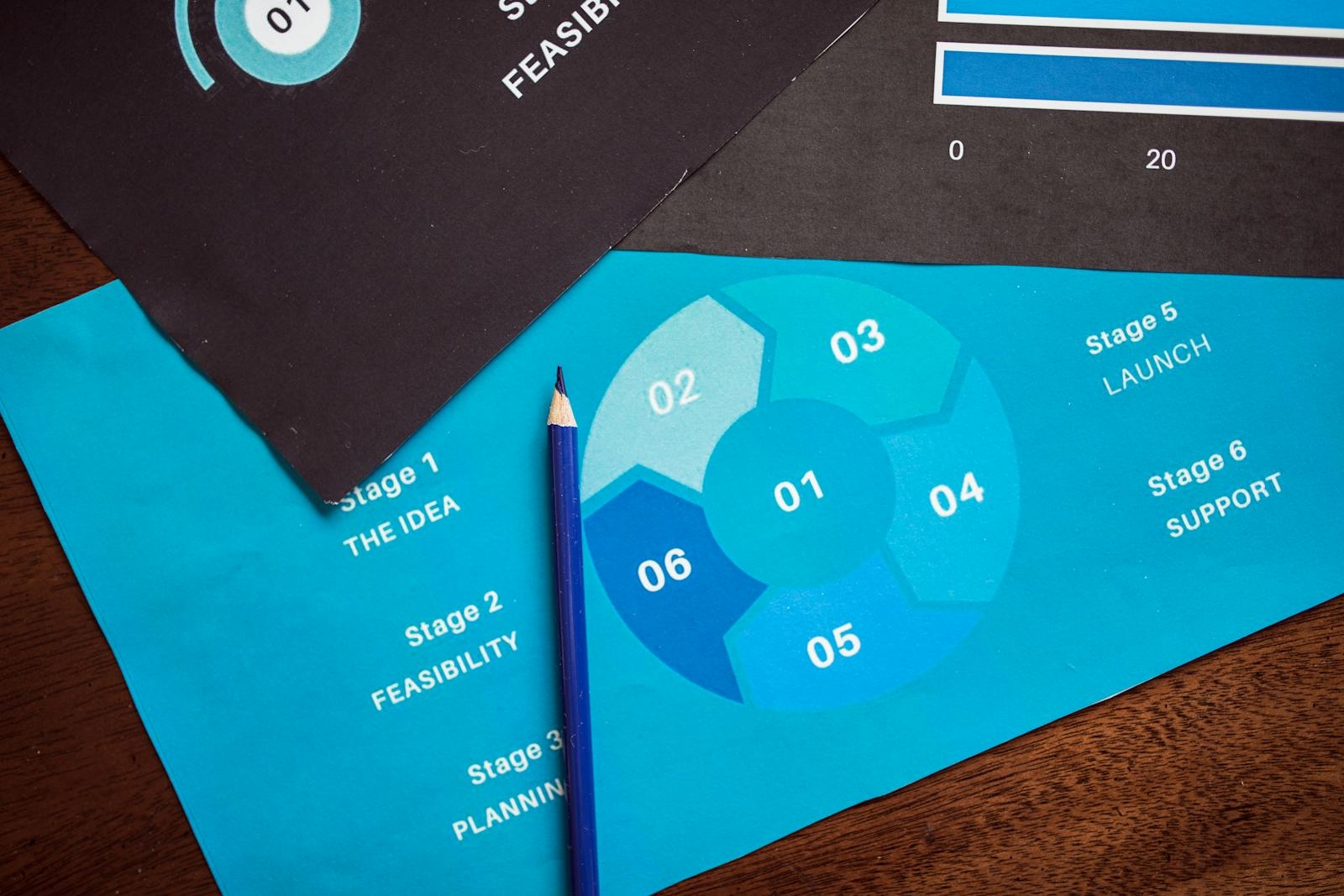
Understanding the root causes of failure is the first step toward building better models.
Over-reliance on static assumptions.
Many feasibility studies are built on fixed assumptions about market conditions, consumer behaviour, and economic factors. When these assumptions prove incorrect, as they often do in volatile markets, the entire study becomes unreliable. Traditional models treat variables as constants when they should be treated as ranges or probabilities.
Inadequate risk assessment.
Most studies include a risk section, but they often underestimate the probability and impact of potential risks. Studies may identify risks but fail to quantify them properly or consider how multiple risks might interact. This creates a false sense of security.
Confirmation bias in data collection.
Project sponsors sometimes approach feasibility studies with predetermined conclusions. They consciously or unconsciously select data that supports their desired outcome. This leads to overly optimistic projections and dismissal of warning signs.
Insufficient stakeholder engagement.
Studies that fail to engage diverse stakeholders often miss critical insights. Different stakeholders bring unique perspectives on technical challenges, operational constraints, regulatory requirements, and market realities.
Failure to account for implementation complexity.
Even when a project appears feasible on paper, execution complexity can derail success. Many studies focus heavily on what needs to be accomplished but give insufficient attention to how it will be achieved.
Outdated methodologies in a digital age.
The business landscape has transformed dramatically, but many feasibility study methodologies have not kept pace. Studies that do not incorporate data analytics, scenario modelling, and real-time market intelligence are increasingly inadequate.
Building more adaptive feasibility models
To overcome these challenges, organisations need to evolve their approach.
Embrace scenario planning and sensitivity analysis.
Rather than relying on single-point estimates, adaptive models explore multiple scenarios. Best case. Worst case. Most likely case. Sensitivity analysis identifies which variables have the greatest impact on outcomes.
This approach acknowledges uncertainty and helps organisations prepare for various possible futures.
Practical application: Build financial models that can easily adjust key variables such as market penetration rates, pricing, cost structures, and timelines. Test how changes in each variable affect overall viability.
Integrate real-time data and market intelligence.
Modern feasibility studies should leverage current market data, competitive intelligence, and trend analysis. Rather than relying solely on historical data or industry reports that may be months or years old, incorporate real-time information sources.
Practical application: Use market research platforms, social media analytics, and competitor monitoring tools. Conduct primary research such as customer interviews or pilot programs to test assumptions before full commitment.
Adopt agile methodology principles.
Adaptive feasibility studies should be iterative rather than one-time exercises. Break the study into phases with decision points that allow for course corrections. This staged approach enables organisations to test assumptions incrementally.
Practical application: Structure your feasibility study with milestone reviews. After each phase, assess whether assumptions still hold and whether proceeding to the next phase makes sense.
Quantify risks with probabilistic modeling.
Move beyond simple risk matrices to quantitative risk assessment. Use techniques such as Monte Carlo simulation to model how various risks might affect outcomes. This provides a probability distribution of possible results.
Practical application: Identify key risk factors and assign probability distributions. Run simulations to understand the range of possible outcomes and the likelihood of achieving various results.
Engage cross functional teams and external experts.
Broaden the team conducting the feasibility study to include diverse perspectives. Include representatives from operations, finance, marketing, legal, and technical departments. Consider bringing in external experts who can provide unbiased assessments.
Practical application: Establish a steering committee with representatives from all affected departments. Conduct workshops that bring different stakeholders together to challenge assumptions.
Build in feedback loops and learning mechanisms.
Adaptive models should include mechanisms for continuous learning and improvement. Create feedback loops that capture lessons from pilot programs, early implementations, or similar projects.
Practical application: Conduct pilot programs or proof of concept initiatives before full scale implementation. Document lessons learned and use them to update the feasibility study.
Focus on implementation readiness.
Expand the feasibility study beyond whether the project can succeed to whether the organisation is ready to execute it. Assess organisational capacity, change management requirements, stakeholder buy in, and resource availability.
Practical application: Include an implementation readiness assessment that evaluates organisational capabilities, cultural fit, resource availability, and change management requirements.
Technology tools for adaptive feasibility studies
Modern technology can significantly enhance the quality and adaptability of feasibility studies.
Data analytics platforms. Tools like Tableau, Power BI, or Google Analytics help visualise data and identify trends. These platforms enable real time dashboards that can be updated as new information becomes available.
Financial modeling software. Specialised software such as @RISK, Crystal Ball, or Quantrix allows for sophisticated scenario planning and risk analysis. These tools make it easier to conduct sensitivity analysis and probabilistic modeling.
Project management and collaboration tools. Platforms like Asana, Monday.com, or Microsoft Project facilitate collaboration among diverse team members and help track the study process itself.
Market research and intelligence platforms. Services like Statista, IBISWorld, or industry specific databases provide access to current market data and trends. Social listening tools can provide real time insights into customer sentiment.
Case study: adaptive approach in action
Consider a retail company exploring expansion into e commerce. A traditional feasibility study might project sales based on industry averages and assume a fixed customer acquisition cost.
An adaptive approach would do something different.
Conduct scenario analysis examining outcomes under different market penetration rates, competitive responses, and economic conditions.
Run pilot programs in select markets to test assumptions about customer behaviour and acquisition costs before full rollout.
Use real time analytics to track pilot performance and adjust projections based on actual data rather than assumptions.
Assess implementation readiness by evaluating the organisation’s technical capabilities, fulfilment capacity, and cultural readiness for digital transformation.
Build in decision gates at key milestones to reassess viability as the market evolves.
This adaptive approach provides more reliable information for decision making and allows the organisation to pivot if early results suggest changes are needed.
Where to start tomorrow
Do not try to transform your entire feasibility study process overnight.
Start with one project. Apply scenario planning instead of single point estimates.
Add sensitivity analysis. Identify which variables actually matter most.
Include implementation readiness. Assess your organisation’s ability to execute.
Run a pilot. Test assumptions before full commitment.
Get diverse input. Bring different perspectives to the table.
Use better tools. Data analytics. Simulation software. Real time data.
Final word
Feasibility studies are essential tools. But static ones fail.
The business environment changes too fast. Assumptions become outdated. Risks materialise unexpectedly. Implementation proves harder than planned.
Adaptive models solve these problems. Scenario planning. Real time data. Agile methods. Probabilistic risk assessment. Implementation readiness.
The organisations that adopt these approaches will make better decisions. They will avoid costly project failures. They will allocate resources more effectively.
Do not let an outdated feasibility study sink your next project. Build adaptive models instead.
CALL TO ACTION
Ready to Build a More Adaptive Feasibility Model?
Don’t let outdated methodologies put your next project at risk. Contact Stonehill Research today to learn how our adaptive feasibility studies can provide the insights you need for confident decision-making.
Our Feasibility Study Services Include
Adaptive feasibility study design and execution. Scenario planning and sensitivity analysis. Quantitative risk assessment and Monte Carlo simulation. Implementation readiness assessment. Cross-functional stakeholder engagement. Real-time market intelligence integration. Pilot program design and analysis. Decision gate framework development.
Why Choose Stonehill Research?
Practical Experience. We have conducted feasibility studies across industries, including manufacturing, technology, retail, real estate, and infrastructure. We understand what works and what fails.
Adaptive Methodology. Our approach uses scenario planning, real-time data, and probabilistic modelling. We do not give you a static report. We give you a dynamic decision-making tool.
Independent Perspective. We have no preconceived conclusions. We follow the data wherever it leads. Even if that means recommending against the project.
Implementation Focus. We do not stop at “viable.” We assess whether your organisation can actually execute. We identify gaps before they become failures.
Contact Us Today
📧 Email: info@stonehillresearch.com
📞 Phone: +234 802 320 0801
📍 Address: 5, Ishola Bello Close, Off Iyalla Street, Alausa, Ikeja, Lagos
Schedule a Consultation. Let us help you turn your vision into a viable reality.
Stonehill Research – Your Partner in Adaptive Feasibility Studies
REFERENCES
Project Management Institute. Feasibility Study. https://www.pmi.org/learning/library/feasibility-study-explores-project-viability-6396
There are no comments