

The Rise of Mini-Grids: Transforming Energy Access for Rural Enterprises
Energy access is one of the biggest challenges for rural communities worldwide.
Urban areas enjoy reliable electricity. But approximately 750 million people globally, 600 million of whom are in Africa, still lack access to electricity.
Mini-grids are changing this. They bring clean, reliable power to remote enterprises and communities that lie beyond the reach of national transmission grids.
Let me explain how mini-grids work and why they are transforming rural economies.
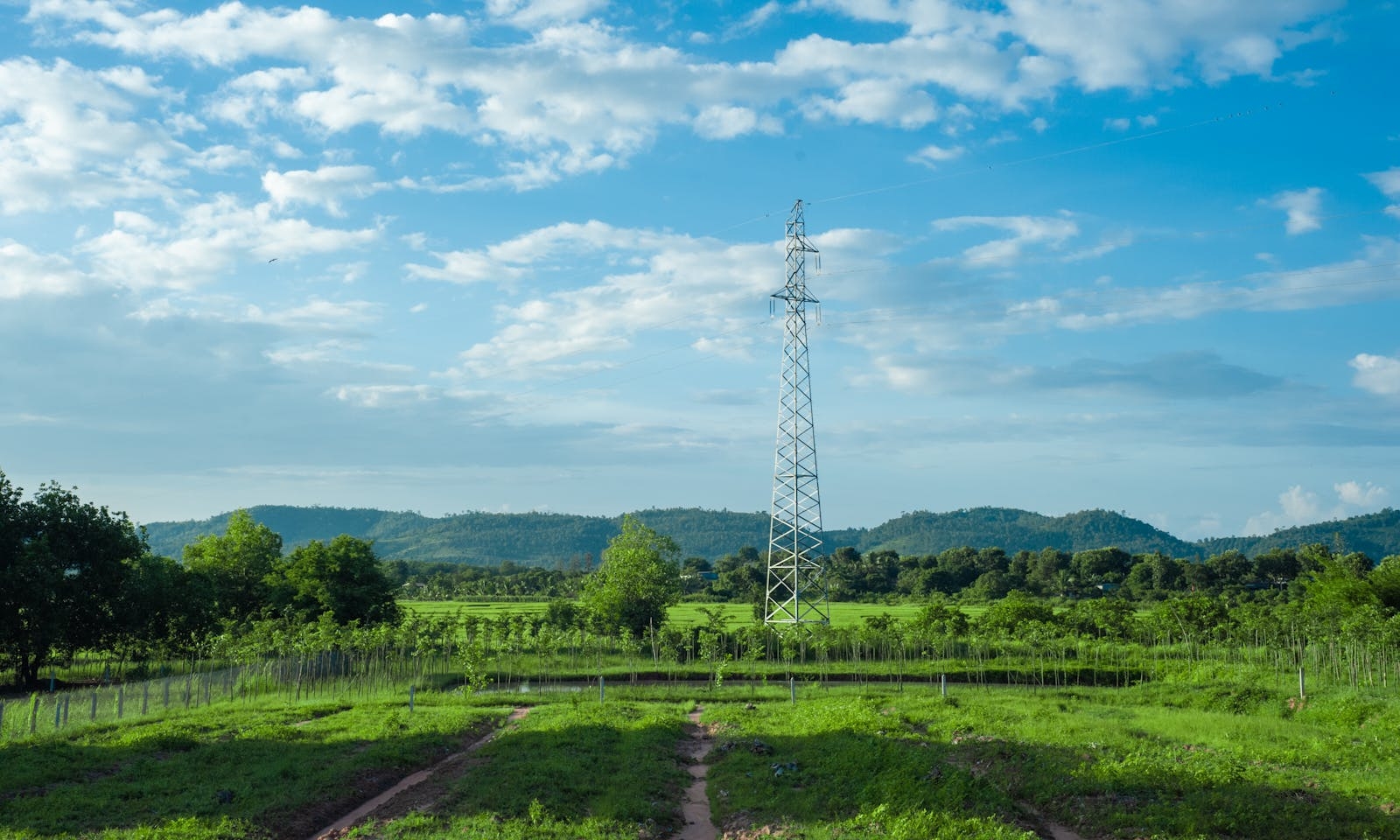
Understanding mini-grids: a definition
According to the African Development Bank’s Green Mini-Grid Help Desk, a mini-grid consists of “small-scale electricity generators and possibly energy storage systems interconnected to a distribution network that supplies electricity to a small, localised group of customers and operates independently from the national transmission grid.”
Mini-grids range in size from a few kilowatts up to 10 megawatts. They can be powered by solar photovoltaic panels, wind turbines, small scale hydropower, or hybrid combinations with battery storage.
Unlike traditional grid extension, which is prohibitively expensive in remote areas, mini-grids offer a cost effective and scalable solution for rural electrification.
The unprecedented growth of the mini-grid sector
The mini-grid industry is experiencing remarkable momentum.
Between 2018 and 2024, the share of diesel capacity in mini-grids plummeted from 42% to 29%. In contrast, the share of solar PV systems rose from 14% to 59% during the same period. This shift toward renewable energy reflects technological advancement and growing environmental consciousness.
In Nigeria alone, by November 2024, 173 mini-grids serving more than 100,000 connections had been commissioned. Developers have signed grant agreements with Nigeria’s Rural Electrification Agency for another 215 mini-grids. These projects represent a total installed capacity exceeding 13 MW.
Source: Sustainable Energy for All (SEforALL). Mini-grids are seeing unprecedented growth. https://www.seforall.org/news/mini-grids-seeing-unprecedented-growth-in-push-to-achieve-universal-energy-access
Cost optimisation and private investment.
Recent research from Rwanda’s emerging mini-grid market shows that private investment in the energy mix can help lower the cost of capital. A rise in the amount of capital available for rural electrification could result from a fall in the cost of capital.
Diversification strategies, both geographic and technological, can effectively reduce investment risks and make mini-grids more attractive to private investors.
Transforming rural enterprises through reliable power
Mini-grids are catalysts for economic transformation.
Enabling productive use of electricity.
Access to reliable electricity fundamentally changes what rural enterprises can achieve. Mini-grids power agricultural processing including cold storage facilities, irrigation pumping systems, and grain mills. They power commercial businesses like shops, ice makers, mobile phone charging stations, and restaurants.
They power manufacturing and crafts including wood and metal working shops, textile production, and artisanal manufacturing. They power telecommunications through mobile network towers enabling digital connectivity. They power healthcare facilities with vaccine refrigeration, medical equipment, and extended operating hours. They power educational institutions with computers, internet access, and adequate lighting for evening study.
Rural electrification improves socioeconomic conditions by enabling extended productive hours, enhancing access to education, and empowering women.
Technical optimization for rural settings.
Modern mini-grid design has evolved to address rural electrification challenges. A hybrid system of solar PV with battery storage and a backup generator, with capacity expansion over time, is the most cost effective option.
The optimal scenario achieves a renewable energy penetration of 94.7%, with the generator contributing less than 6% of the total energy supply. This balances cost effectiveness with reliability.
Latest policy innovations and market approaches

Governments across Africa and Asia are implementing innovative approaches to accelerate mini-grid deployment.
Diverse government models.
Kenya allows bottom up development of mini-grids at sites selected, owned, and operated by private developers outside a 15 kilometre zone surrounding existing medium voltage lines. This gives developers flexibility while protecting existing grid infrastructure investments.
Nigeria is pioneering a new model where mini-grids serve communities while also interconnecting with local distribution companies. These mesh grid approaches combine the resilience of decentralised systems with the efficiency of network interconnection.
In Nigeria, grant structures typically cover approximately 60% to 65% of projected capital costs, with average requested tariffs around $0.40 per kWh. This balanced approach ensures commercial viability while maintaining affordable tariffs.
Source: World Bank Group ESMAP. Five Government Approaches to Mini-Grid Development. https://www.esmap.org/sites/default/files/resources-document/LW-138-Five-Governnment-Approaches.pdf
Regional programs driving scale.
ECREEE’s Regional Off-Grid Electrification Programme (ROGEAP), funded by the World Bank, is a USD 200 million project supporting rural electrification via renewable energy systems in the Liptako-Gourma region.
The ECOWAS region has also established the ECOWAS Renewable Energy & Energy Efficiency Facility (EREEEF), a $75 million blended finance facility specifically designed to support small and medium sized renewable energy projects in rural and peri-urban areas.
Source: ECREEE. Rural Electrification & MiniGrid Program. https://www.ecreee.org/rural-electrification-minigrid-program/
Overcoming challenges for long-term sustainability
Key success factors.
Research on mini-grid projects worldwide identifies several critical factors for success. Active community participation in project design, operation, and maintenance ensures that systems meet local needs and fosters ownership. Training local personnel for system maintenance reduces dependence on external technicians.
Clear regulations regarding licensing, tariffs, and grid interconnection reduce investor uncertainty. Promoting income generating uses of electricity helps ensure customers can afford tariffs while improving system utilisation.
Supportive policies, capacity planning, and stakeholder engagement are essential for long term sustainability and socioeconomic development.
Source: ScienceDirect. An analysis of renewable mini-grid projects for rural electrification. https://www.sciencedirect.com/science/article/abs/pii/S0038012120308363
Financial viability.
The economic case for mini-grids continues to strengthen. With declining solar PV costs and improved battery technology, mini-grids are becoming increasingly competitive with diesel based alternatives and even grid extension.
Achieving financial sustainability requires attention to tariff structures that balance affordability with cost recovery, productive use promotion to increase demand and improve load factors, access to patient capital and appropriate financing instruments, and risk mitigation mechanisms to attract private investment.
The path forward: projections and opportunities
Meeting global energy goals.
According to the World Bank’s Energy Sector Management Assistance Program (ESMAP), 47 million people are served by 19,000 mini-grids, mostly powered by diesel and other fossil fuels. By 2030, ESMAP aims to reach 490 million people through 210,000 mini-grids powered by renewable resources at a total investment of USD 12 billion.
This represents a transformational expansion that could help achieve universal energy access, one of the United Nations’ Sustainable Development Goals (SDG 7). Nearly half a billion people could be using electricity from mini-grids by 2030.
Innovation and technology trends.
The third generation of mini-grids incorporates several technological innovations. Battery storage systems for 24/7 power availability. Smart meters and prepayment systems for efficient revenue collection. Remote monitoring and management systems reducing operational costs. Energy efficient appliances integrated into business models. Internet of Things connectivity for predictive maintenance.
These technologies make mini-grids more reliable, affordable, and easier to manage at scale.
Private sector leadership.
An increasing share of mini-grid development is being led by private companies that leverage innovative business models and financing strategies. These companies are building portfolios of mini-grids rather than one off projects, allowing them to achieve economies of scale and attract larger volumes of investment capital.
Regional spotlight: Africa leading the way
Sub-Saharan Africa remains the epicentre of mini-grid innovation and deployment, driven by the urgent need for energy access and abundant renewable energy resources.
In ECOWAS, access to electricity is characterised by strong disparities between countries and within countries between urban and rural areas. At the regional level, the rate of household access to electricity in 2019 was around 54%.
Despite this challenge, remarkable progress is being made. In Senegal’s DPER-SE project, 40 clean mini-grids have been developed, providing 400 kW of clean energy to 40 villages in the southern regions.
Source: United Nations Development Programme (UNDP). Mini-Grids for Powering and Developing the Rural Sahel. https://www.undp.org/africa/waca/blog/mini-grids-powering-and-developing-rural-sahel
The Sahel initiative.
The Africa Minigrid Program (AMP), financed by diverse international partners and spearheaded by the UNDP in collaboration with governments, is set to assist countries in adopting innovative models for electricity supply.
In Burkina Faso, rural electrification rates increased from 3.2% to nearly 10% between 2016 and 2019, with mini-grids playing a growing role in this expansion. Seven municipalities across different regions are now benefiting from solar powered mini-grids.
Where to start tomorrow
Do not try to electrify an entire region at once.
Start with one community. Assess their needs. Understand their productive activities.
Choose the right technology. Solar PV with battery storage is the most cost effective option.
Engage the community early. Their participation is critical for long term success.
Train local technicians. Build capacity for maintenance and operations.
Secure appropriate financing. Blended finance models work best for mini-grids.
Monitor and adapt. Use smart meters and remote monitoring to optimise performance.
Final word
Mini-grids are more than a technical solution. They are enablers of economic transformation, social development, and environmental sustainability.
For rural enterprises, reliable electricity means extended operating hours, increased productivity, new business opportunities, and connection to the digital economy.
Declining renewable energy costs, innovative financing models, supportive policy frameworks, and growing private sector involvement have created unprecedented momentum.
As we move toward 2030, mini-grids will play an increasingly central role in achieving universal energy access and catalysing rural economic development.
The rise of mini-grids is not just about bringing light to darkness. It is about illuminating pathways to prosperity for millions of rural enterprises and communities.
CALL TO ACTION
Partner with Stonehill Research for Energy Access Solutions
At Stonehill Research, we understand that sustainable energy access is the foundation of rural economic development. Whether you are a government agency planning rural electrification programs, an investor exploring opportunities in the clean energy sector, or a development organisation seeking to maximise impact, we provide the research, analysis, and strategic insights you need to succeed.
Our Services Include
Mini-grid feasibility studies and site assessments. Policy and regulatory analysis for renewable energy projects. Investment opportunity evaluation and due diligence. Market research and demand forecasting. Impact assessment and monitoring frameworks. Stakeholder engagement and community consultation strategies.
Why Work With Us?
Deep African Energy Expertise. We understand the unique challenges and opportunities of rural electrification across African markets.
Evidence Based Solutions. We combine rigorous research methodologies with on the ground understanding of local contexts.
Practical Insights. We deliver actionable recommendations that drive results, not just academic reports.
Commitment to Impact. We are passionate about sustainable energy access and rural development.
Get in Touch Today
Let us help you navigate the opportunities and challenges in the mini-grid sector. Contact us to discuss how we can support your rural electrification initiatives.
📧 Email: info@stonehillresearch.com
📞 Phone: +234 802 320 0801
📍 Address: 5, Ishola Bello Close, Off Iyalla Street, Alausa, Ikeja, Lagos, Nigeria
Together, let us illuminate the path to sustainable energy access and rural prosperity.
Stonehill Research – Your Partner in Energy Access Solutions
REFERENCES
African Development Bank. Introduction to Mini-Grids. https://greenminigrid.afdb.org/how-it-works/help-desk-developers-and-operators/introduction-mini-grids
Sustainable Energy for All (SEforALL). Mini-grids seeing unprecedented growth in push to achieve universal energy access. https://www.seforall.org/news/mini-grids-seeing-unprecedented-growth-in-push-to-achieve-universal-energy-access
United Nations Development Programme (UNDP). Mini-Grids for Powering and Developing the Rural Sahel. https://www.undp.org/africa/waca/blog/mini-grids-powering-and-developing-rural-sahel
ECREEE. Rural Electrification & MiniGrid Program. https://www.ecreee.org/rural-electrification-minigrid-program/
World Bank Group Energy Sector Management Assistance Program (ESMAP). Five Government Approaches to Mini-Grid Development. Knowledge Note Series 2025/138. https://www.esmap.org/sites/default/files/resources-document/LW-138-Five-Governnment-Approaches.pdf
ScienceDirect. An analysis of renewable mini-grid projects for rural electrification. Solar Energy Journal. https://www.sciencedirect.com/science/article/abs/pii/S0038012120308363
ScienceDirect. Planning off-grid rural electrification with MicroGridsPy: The case of Dugub, Nigeria. https://www.sciencedirect.com/science/article/pii/S2211467X25001385
ScienceDirect. Mini-grids and private investment in rural electrification: Insights from Rwanda’s emerging market. https://www.sciencedirect.com/science/article/pii/S0957178725000633
There are no comments